Saturday, August 20, 2016

The price of powerlessness

From The Washington Post,

This week Russian bombers flew out of Iranian air bases to attack rebel positions in Syria. The State Department pretended not to be surprised. It should be. It should be alarmed. Iran’s intensely nationalistic revolutionary regime had never permitted foreign forces to operate from its soil. Until now.


A Russian bomber operating in Syria from an airbase in Iran
(from a Russian Defence Ministry video)

The reordering of the Middle East is proceeding apace. Where for 40 years the U.S.-Egypt alliance anchored the region, a Russia-Iran condominium is now dictating events. That’s what you get after eight years of U.S. retrenchment and withdrawal. That’s what results from the nuclear deal with Iran, the evacuation of Iraq and utter U.S. immobility on Syria.

Consider:

Iran
The nuclear deal was supposed to begin a rapprochement between Washington and Tehran. Instead, it has solidified a strategic-military alliance between Moscow and Tehran. With the lifting of sanctions and the normalizing of Iran’s international relations, Russia rushed in with major deals, including the shipment of S-300 ground-to-air missiles. Russian use of Iranian bases now marks a new level of cooperation and joint power projection.

Iraq
These bombing runs cross Iraqi airspace. Before President Obama’s withdrawal from Iraq, that could not have happened. The resulting vacuum has not only created a corridor for Russian bombing, it has gradually allowed a hard-won post-Saddam Iraq to slip into Iran’s orbit. According to a Baghdad-based U.S. military spokesman, there are 100,000 Shiite militia fighters operating inside Iraq, 80 percent of them Iranian-backed.
 
Syria
When Russia dramatically intervened last year, establishing air bases and launching a savage bombing campaign, Obama did nothing. Indeed, he smugly predicted that Vladimir Putin had entered a quagmire. Some quagmire. Bashar al-Assad’s regime is not only saved. It encircled Aleppo and has seized the upper hand in the civil war. Meanwhile, our hapless secretary of state is running around trying to sue for peace, offering to share intelligence and legitimize Russian intervention if only Putin will promise to conquer gently.

Consider what Putin has achieved. Dealt a very weak hand — a rump Russian state, shorn of empire and saddled with a backward economy and a rusting military — he has restored Russia to great-power status. Reduced to irrelevance in the 1990s, it is now a force to be reckoned with.

In Europe, Putin has unilaterally redrawn the map. His annexation of Crimea will not be reversed. The Europeans are eager to throw off the few sanctions they grudgingly imposed on Russia. And the rape of eastern Ukraine continues.

Ten thousand have already died and now Putin is threatening even more open warfare. Under the absurd pretext of Ukrainian terrorism in Crimea (reminiscent of Hitler’s claim that he invaded Poland in response to a Polish border incursion), Putin has threatened retaliation, massed troops in eight locations on the Ukrainian border, ordered Black Sea naval exercises and moved advanced anti-aircraft batteries into Crimea, giving Moscow control over much of Ukrainian airspace.

And why shouldn’t he? He’s pushing on an open door. Obama still refuses to send Ukraine even defensive weapons. The administration’s response to these provocations? Urging “both sides” to exercise restraint. Both sides, mind you.

And in a gratuitous flaunting of its newly expanded reach, Russia will be conducting joint naval exercises with China in the South China Sea, in obvious support of Beijing’s territorial claims and illegal military bases.

Yet the president shows little concern. He is too smart not to understand geopolitics; he simply doesn’t care. In part because his priorities are domestic. In part because he thinks we lack clean hands and thus the moral standing to continue to play international arbiter.

And in part because he’s convinced that in the long run it doesn’t matter. Fluctuations in great power relations are inherently ephemeral. For a man who sees a moral arc in the universe bending inexorably toward justice, calculations of raw realpolitik are 20th-century thinking — primitive, obsolete, the obsession of small minds.

Obama made all this perfectly clear in speeches at the U.N., in Cairo and here at home in his very first year in office. Two terms later, we see the result. Ukraine dismembered. Eastern Europe on edge. Syria a charnel house. Iran subsuming Iraq. Russia and Iran on the march across the entire northern Middle East.

At the heart of this disorder is a simple asymmetry. It is in worldview. The major revisionist powers — China, Russia and Iran — know what they want: power, territory, tribute. And they’re going after it. Barack Obama takes Ecclesiastes’ view that these are vanities, nothing but vanities.

In the kingdom of heaven, no doubt. Here on earth, however — Aleppo to Donetsk, Estonia to the Spratly Islands — it matters greatly.

Where Palestinian Aid Really Goes

From Commentary Magazine, 11 August 2016, by Jonathan Tobin:

In the last week, two scandals involving aid to the Palestinians have emerged.
 
Palestinians
 
The initial reaction from both the UN and World Vision was a combination of denial and shock at the notion that anyone would think these cases are typical.

What people who give to causes that purport to help poor Palestinians should understand is that this kind of malfeasance is not a matter of individuals going off the rails but a function of the political culture in which they live.

Stealing money intended for humanitarian use is endemic not only by those employed by outside agencies but also by the ruling factions. Hamas-run Gaza is very much like the Palestinian Authority kleptocracy that runs the West Bank. Both are pits of corruption.

What’s curious is that this knowledge hasn’t seemed to penetrate into the consciousness of the international philanthropic world. Though other peoples have suffered more and are given less, the Palestinians have been the focus of more attention than any other humanitarian cause. The United Nations has one refugee agency to deal with just the Palestinians—the UN Relief and Works Agency—and another to help with everyone else around the world. UNRWA has done far more to perpetuate the Palestinian refugee problem than to solve it. Moreover, the Palestinians are also the recipients of vast amounts of charitable aid from other sources including governments and numerous philanthropic agencies.

Why does Palestinian corruption get a pass? Because their status as alleged victims of the Jews seems to give them priority over every other group in the world.

How can we be all that shocked when individuals divert money and material intended to alleviate the plight of ordinary Palestinians to terrorism when that is precisely what both Hamas and Fatah do on a regular basis and on a much larger scale?

That is especially true for Mahmoud Abbas’s faction, whose leaders have grown wealthy while the world continues to picture Palestinians as indigent. A group that pays pensions to imprisoned terrorists and to the survivors of those who died while trying to kill Jews (and boasts on Facebook that it has killed 11,000 Israelis) ought not to be in any position to cry poverty, but that is exactly what it does.

The supposedly more puritanical Islamists of Hamas are guilty of many of the same offenses. Few homes have been rebuilt there since the 2014 war but somehow the Hamas tunnel network—which serves as a point of attack for terror raids into Israel and strongholds to shelter Palestinian armaments, fighters, and leaders while the population has no bomb shelters—has been reconstituted and strengthened.

The UN and World Vision and all those who contribute to other Palestinian charities should spare us their expressions of shock or denials about these scandals. While the Palestinians have genuine needs, anyone who gives money to them should do so in the knowledge that they are just as likely to be financing a terrorist’s pension, a terror tunnel, or a Hamas bunker than they are to feed a child or build a home.


Wednesday, August 17, 2016

Israel, Pakistan, UAE Join US Air Force Military Exercises

From JNS.org, 16 Aug 2016:

Israel, Pakistan and the United Arab Emirates started participating in joint aerial military exercises with the US Air Force in Nevada on Monday.
Israel Air Force planes. Photo: Israel Defense Forces.
Israel Air Force jets.
Photo: Israel Defense Forces

While Pakistan and the UAE are both US allies, Israel does not have formal relations with either Muslim country. Nevertheless, clandestine contacts between Israel, Pakistan and the UAE  — as well as other Sunni Muslim countries — have surfaced in recent years, due to a shared concern over Iran.
During a Red Flag drill, described by Israeli officials as a unique, high-quality exercise, pilots at the Nellis Air Force base are being divided into teams to simulate dog fights and other advanced aerial-combat situations.

The Israel Air Force trains regularly at home and abroad to maintain operational readiness. The Red Flag exercise will continue until Aug. 26.

Sunday, August 14, 2016

World Vision Aid to Terrorism

11 August 2016
This past week two humanitarian workers in Gaza were indicted, for allegedly diverting aid to Hamas.

According to the charges, the manager of the NGO World Vision’s Gaza operations, Mohammed El-Halabi, funneled 60% of the organization’s Gaza budget to Hamas. Waheed Borsh, a United Nations Development Programme (UNDP) employee since 2003, has been indicted with providing material assistance to Hamas and using his position to aid the terrorist group. Save the Children was also mentioned in the context of these allegations.
The Israeli indictment and media reported that the World Vision funds were used in the construction of Hamas tunnels, military installations, and other terrorist activities.
Prof. Gerald Steinberg, President of NGO Monitor noted, “To avoid enabling murderous Hamas attacks, and compounding the suffering of people in Gaza, aid groups need to apply surveillance and intelligence technologies, particularly regarding employees and their activities.”
NGO Monitor identified World Vision as susceptible to aid diversion in its 2015 book, Filling in the Blanks, concluding that there is “little doubt as to World Vision’s willingness to negotiate and coordinate with armed groups. This raises questions as to whether the group would prevent components of its aid from being misappropriated by terrorist organizations, if it felt that taking a stand would jeopardize the organization’s ability to continue its operations in a given area.”
The failure to properly prevent the siphoning of funds stems in part from a lack of will on the part of humanitarian organizations. Many international NGOs reject attempts to incorporate security concerns into funding guidelines, decrying them as politically motivated. The International Committee of the Red Cross (ICRC) has argued that legislation designed to prevent hijacking of aid by terrorist organizations should not apply to humanitarian groups, and the Norwegian Refugee Council (NRC) has stated that “counter-terrorism measures remain the primary obstacle to humanitarian action within Gaza.”
Humanitarian NGOs operate in conflict zones around the world, risking the diversion of aid by terrorist groups. The recent decision by USAID to suspend its humanitarian assistance to Syria due to this issue, as well as the multiple UN reports on commandeering of aid by terrorist organizations in Somalia, underscore this point.
Prof. Gerald Steinberg adds that, “World Vision’s failures in Gaza highlight the problems of a multi-billion dollar NGO industry that remains largely unregulated and unexamined. While World Vision is currently the focus of attention following the arrest of El-Halabi and the scale of the allegations, this should be a cautionary moment for many other international aid organizations that have similar operations in Gaza, such as Oxfam, Care, Christian Aid, and UNRWA – the United Nations Relief and Works Agency.”
As NGO Monitor has warned repeatedly, humanitarian efforts in warzones are inherently susceptible to extortion and theft by violent actors, including terrorist organizations. In particular, Hamas has a history of raiding aid warehouses and convoys as well as developing tax schemes designed to skim money off of international largesse. UN Gaza aid mechanisms similarly suffer from corruption, compromising the integrity of imported materials. Any consideration of humanitarian projects in Gaza must, therefore, include vigorous, concrete, and effective policies that address the risk of aid diversion, both on the part of the implementing organization and on the part of the funder.

Tuesday, August 09, 2016

Judea and Samaria in a region of failed states

From Sovereignty, Issue No 7, August 2016, by David P Goldman:

With the collapse of several artificial nation-states created by the victors of the First World War, the entire region from the Mediterranean Sea to the Persian Gulf has entered a prolonged period of instability.

The Syrian and Libyan states has ceased to exist; the Iraqi State is near collapse; the Lebanese state is hostage to Iran; the Turkish state has just survived a military coup and is descending into authoritarian rule; and Saudi Arabia will not be able to buy domestic peace much longer if oil prices remain low. Egypt survived a revolution and counterrevolution to return to the status quo of military rule, but depends on subsidies from the Gulf States.
Non-state actors now occupy the political and military space left vacant by the collapse or decline of nation-states. That is emphatically true in Syria, Lebanon and Iraq, and increasingly true in Turkey. The most fanatical and determined of these actors play the decisive role—Hezbollah in Lebanon and Syria and the Iran-backed Shi’ite militias in Iraq, and ISIS and al-Qaeda in Iraq and Syria. Ethnic and sectarian divisions that were contained by the region’s autocracies have turned into vehicles for existential war. With a military-age population of nearly 30 million, the region has sufficient cannonfodder to continue the war for another generation, even without the involvement of foreign fighters from the Caucasus, Western China and Southeast Asia.

That is why Israel cannot presently give up control of Judea and Samaria, and will not be able to give up control in the foreseeable future, whether or not it wants to.

The problem lies not with the settlers but with the unsettlers. Radicalization has replaced long-established states with non-state sectors. What passes for "Palestine" is a collection of radicalized non-state actors in search of a state. The IDF presence in Judea and Samaria limits the extent to which these non-state actors can be drawn into the conflicts that surround them. The departure of the IDF would leave Iran, Turkey, ISIS and al-Qaeda free to compete for control of the various armed entities controlled by the Palestine Authority, with their estimated (in 2007) 176,500 men under arms. Surrounded by fail states, a putative State of Palestine would become a prefabricated failed state.

Why did the states of the Levant and Mesopotamia fail so thoroughly and so suddenly? The Sykes-Picot agreement of 1916 brought nearly a century of relative stability to the Levant and Mespotamia. Britain and France proposed to divide the Arab provinces of the soon-to-be-defeated Ottoman Empire along lines that disrupted ethnic and confessional continuity. Syria and Lebanon, the French sphere of influence, separated the Sunnis of Mesopotamia from their coreligionists and tribal cousins in the Levant by an apparently arbitrary border. Iraq, ruled first by a Hashemite monarchy installed by the British and then by the Ba’ath Party, allowed a Sunni minority to rule a Shi’ite majority. After the Second World War Iraq and Syria became virtual mirror images: the same Ba’ath Party ruled both countries, except that the Syrian Ba’athists were led by a deviant Shi’ite sect, the Alawites, while the Iraqi Ba’athists were Sunni.

This arrangement was crafted for a premodern society with a small middle class, in which military service offered social advancement to the rural poor. It could not survive modernization indefinitely; In Syria, for example, the Syrian civil war was preceded by a crisis in the country’s agricultural sector that displaced hundreds of thousands of farmers from their land. The incipient crisis of modernity, though, encountered fatal policy errors by the West.

Left undisturbed, the Sykes-Picot system might have lasted for some decades to come. In countries characterized by longstanding and bitter ethnic and confessional divisions, minority rule had three virtues. First, the other minorities supported minority rule as a matter of course: Syrian Christians aligned with the Alawites against the Sunni majority and Iraqi Christians aligned with the Sunni Ba’athists against the Shi’ite majority. Second, the oppressed majorities, namely Syrian Sunnis and Iraqi Shi’ites, knew that the minority government could only persecute them up to a certain point and no further.

Third, the Iraqi state ruled by a Sunni officer corps created a natural balance of power in the region, offsetting the ambitions of Turkey and, most importantly, Iran.

Except for the Iran-Iraq War of 1988, conflicts in the region after 1918 were limited in scope and duration, and, most importantly, rarely led to regime change, although they frequently motivated a change at the top of the regime. Even the American invasion of Iraq in 1991 left Saddam Hussein in power, because Washington wished to maintain the regional power balance.

The old power balance in the region was destroyed in 2007, when the United States stood midwife to majority rule in Iraq, sponsoring a Shi’ite government friendly to Iran, and leaving Iraq’s Sunnis at the mercy of the Shi’ite majority. The Sunnis responded with a terror campaign against American forces and Shi’ites. The United States countered with the "surge" of 20072008, whose most important measure was to put as many Sunnis as possible on the payroll of the American military through the "Sunni Awakening" and the "Sons of Iraq." As long as large numbers of America forces remained on the ground, the insurgency remained dampened. When the last US ground troops left in 2011, theSunni resistance reemerged under the most radical leadership available.

The political crisis known as the "Arab Spring" amplified the sectarian war in Mesopotamia. The Arab rebellions of 2011 began with an incipient food crisis in Egypt and a water crisis in Syria. Subsidies from the Gulf States keep Egypt on life support. Half of Syria’s 22 million people have been displaced and perhaps 400,000 killed. The overflow from Syria has destabilized the surround countries as well as Western Europe. Nearly 2 million Syrian Sunnis have taken refuge in Lebanon and 2.5 million in Turkey. Refugees comprise almost half of Lebanon’s total population of 4 million, shifting the demographic balance to the Sunnis—while the mass Sunni exodus tilts the balance tilts the balance of power in Syria toward the Alawites and other religious minorities, who are largely allied with Iran. Jordan, meanwhile, has taken in 1.26 million Syrian Sunnis, making Palestinians a minority inside Jordan for the first time in a generation. A region that struggled to find sustenance for its people before 2011 has now been flooded with millions of refugees without resources or means of support. They are living for the most part on largesse from the Gulf States, and their young men are prospective cannon fodder.

ISIS and al-Qaeda cannot be eliminated by the usual military means, only contained. With Iran’s ascendancy in the region after the 2015 nuclear agreement, the Sunni extremists have become the spearhead of Sunni resistance to Shi’ite ambitions in the region. The Gulf States and Turkey cannot embrace them, but neither can they permit them to be destroyed. Turkey has an additional move to back the Sunni resistance as a counterweight to the Syrian Kurds, who threaten to conquer the north of Syria from the Mediterranean to the Iraqi border and link up with their Iraqi compatriots in a new Kurdish state.

Freed from the constraints of the SykesPicot states, ethnic and confessional groups in the region are fighting an existential war. What explains the passion and abandon with which Sunnis, Shi’ites, Persians, Arabs and Kurds bring to this war? The answer, I believe, lies in a deep sense of civilizational fragility. The peoples of the region have been thrust suddenly into the modern world. Woken from the long slepe of traditional society, they find themselves confronted by social forces that put their future existence in jeopardy.

Freed from the constraints of the SykesPicot states, ethnic and confessional groups in the region are fighting an existential war. What explains the passion and abandon with which Sunnis, Shi’ites, Persians, Arabs and Kurds bring to this war? The answer, I believe, lies in a deep sense of civilizational fragility. The peoples of the region have been thrust suddenly into the modern world. Woken from the long slepe of traditional society, they find themselves confronted by social forces that put their future existence in jeopardy. It is difficult to measure the impact of modernity, but one failsafe gauge of the social transformation now underway is the sudden demographic transition underway in most of the country of the regions. Arab, Turkish and Persian birth rates are falling from premodern to post-modern levels, and the result is a sudden aging of their populations. The fall in Muslim birth rate is most extreme in Iran and Turkey, with different but related consequences. When Ayatollah Khomeini took power in 1979, the average Iranian woman had seven children; today the total fertility rate has fallen to just 1.6 children, the sharpest drop in demographic history. Iran still has a young population, but it has no children to succeed them. By mid-century Iran will have a higher proportion of elderly dependents than Europe, an impossible and unprecedented burden for a poor country. Iran’s sudden aging will be followed by Turkey and Tunisia.

A review of the recently-released 2015 population data shows that the demographic scissors between Kurds and Turks continues to widen. Despite Erdogan’s exhortations on behalf of Turkish fertility, the baby bust in Turkish-majority provinces continues while Kurds sustain one of the world’s highest birth rates. Even worse, the marriage rate outside of the Kurdish Southeast of the country has collapsed, portending even lower fertility in the future.

According to Turkstat, the official statistics agencies, the Turkish provinces with the lowest fertility rates all cluster in the north and northwest of the country, where women on average have only 1.5 children. The southeastern provinces show fertility rates ranging between 3.2 and 4.2 children per female.

Even more alarming are Turkey’s marriage statistics as reported by Turkstat. Between 2001 and 2015, the number of marriages in Istanbul, the country’s largest city, fell by more than 30%, and by more than 40% in the capital Ankara. Most of the northern and northwestern provinces report a decline of more than half in the number of marriages. Not only are Turkish women refusing to have children; they are refusing to get married. The plunge in the marriage rate among ethnic Turks makes a further sharp decline in fertility inevitable.

As I reported in my 2011 book Why Civilizations Die (and Why Islam is Dying, Too), Muslim countries that achieve a high rate of adult literacy jump from infancy to senescence without passing through adulthood. Like their Iranian, Algerian and Tunisian counterparts, Turkish women reject the constraints of Muslim family life as soon as they obtain a high school education. The shock of sudden passage from traditional society into the modern world has produced the fastest-ever fall in fertility rates in the Muslim world.

Turkey and Iran, ostensibly the two most stable powers in the region, are the most fragile in the long term.

By the middle of the century, Iran’s elderly population will rise to roughly half its working-age population, followed closely by Turkey. Israel’s elderly dependent ratio, by contrast, will peak at around 30%. Iran will have a higher elderly dependency ratio than Western Europe, with roughly a tenth the per capita GDP. It will be the first country in the world to get old before it gets rich. Poor countries universally have had high birth rates and a large young population to support a small proportion of elderly. Iran’s economy will collapse no matter what it does now, and the Iranian leadership is painfully aware of what awaits it.

Demographics are not the cause of the region’s instability, but a symptom: the cause is the dissolution of the bonds of traditional society as modernity overwhelms Iranian health officials estimates that 12% of Iranian women are infected with chlamydia, for example. The collapse of the Turkish marriage rate cited above is another gauge of adverse social change.

In summary, the regional political structures that kept pre-modern populations under control broke down at precisely the point that modernity began to transform Muslim societies. The Levant, Mesopotamia and Persia face an existential crisis that is not imagined: the old way of life cannot continue and the young people of those countries refuse to perpetuate it.

The receding demographic tide in the Arab world has not spared Arabs in Judea and Samaria. The Palestine Authority, though, has inflated population numbers for political reasons, partly to justify more aid and partly to support the notion that a Palestinian state on the West Bank is inevitable.

A 2006 study by the Begin-Sadat Center for Strategic Studies showed that the West Bank and Gaza population in 2004 was only 2.5 million, rather than the 3.8 million claimed by the Palestinian authorities. The numbers were falsified by double-counting Arab residents of East Jerusalem, West Bank Arabs who had moved inside the Green Line after marriage to Israeli Arabs, Palestinians living overseas, and others. Most of all, the PA invented large numbers of births that never occurred.

As the report argued:
The Palestine Central Bureau of Statistics] projected that the number of births in the Territories would total almost 908,000 for the seven-year period from 1997 to 2003. Yet, the actual number of births documented by the PA Ministry of Health for the same period was significantly lower at 699,000, or 238,000 fewer births than had been forecast by the PCBS. The size of the discrepancy accelerated over time. Whereas the PCBS predicted there would be over 143,000 births in 2003, the PA Ministry of Health reported only 102,000 births, which pointed to a PCBS forecast 40% beyond actual results.


After the Begin-Sadat study used health ministry records to refute the estimates of the PA’s statistical bureau, the Palestinian health authorities stopped publishing birth records. There is no hard source of data to compare to the PA’s population umbers. The Palestine Authority continues to over-count births in the West Bank by 30,000 to 60,000 annually, according to Ambassador Yoram Ettinger (ret.). Respectable Western sources ignore the PA estimates. The CIA World Factbook in 2015, for example, put the Israeli Jewish fertility rate at 3.11 vs. 2.91 for West Bank and Samaria Arabs. As Ettinger observes, "In October 2015, Israel's Jewish fertility rate is higher than in any Arab country, other than Yemen, Iraq and Jordan (e.g., Egypt – 2.8 births per woman, Syria – 2.6, Saudi Arabia – 2.1)." Israel’s robust fertility profile also is a symptom: Israel is the only industrial country in the world to reproduce at above the replacement rate of 2.1 live births per female, and by a substantial margin. It is a gauge of Israel’s long-term social and economic viability in contrast to the civilizational decline around it.

Time is on Israel’s side. Conditions in Syria and Iraq will continue to deteriorate. The radical vanguard of the sectarian war in the Middle East will continue to export terrorism to the West. Turkey will remain unstable and will struggle with ethnic and demographic pressures. Iran is a declining country in the medium term; its militaryage population will fall by nearly 10 million during the next ten years due to the collapse in the birth rate of the past decade and a half. For the foreseeable future, the only functioning government on the West Bank will be Israel. The alternative is to turn Judea and Samara into a Petri dish for terrorism and ethnic and confessional war.


Monday, August 08, 2016

60% of World Vision Aid to Gaza Funded Terrorism

From United with Israel, 4 August 2016 by Max Gelber:

Israel’s security forces exposed Hamas’ exploitation of one of the world’s leading charities in order to funnel funds to its terror operations. The Shin Bet (Israel’ Security Agency) announced Thursday the arrest of Mohammed El-Halabi, 38, from Jabalya in the Gaza Strip. El-Halabi is director of the Gaza branch of the international humanitarian aid organization World Vision. The arrest took place at the Erez Crossing between Israel and the Gaza Strip on June 15.

He was detained on suspicion of serious security offenses carried out for Hamas and for exploiting his visits to Israel for that purpose.

During the investigation, El-Halabi revealed that he has been a Hamas member since his youth and had undergone organizational and military training some 15 years ago.

In 2005, Hamas dispatched El-Halabi to infiltrate World Vision. He said Hamas believed that he had a good chance of infiltrating the humanitarian aid organization because his father works for the UN and he himself had worked for the United Nations Development Program.
 
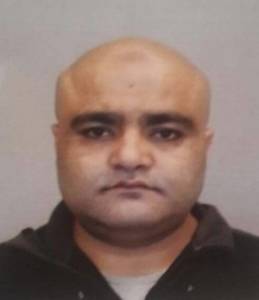
Mohammed El-Halabi
Mohammed El-Halabi. (Shin Bet)
In the latter capacity, he employed “farmers” in areas close to Gaza’s border with Israel, who in fact acted as lookouts for Hamas.

El-Halabi acknowledged that his father, Halil El-Halabi, who has served as head of UNWRA’s educational institutions in the Gaza Strip for years, is a member of Hamas and uses his position as a UN employee to help the terrorist organization.

Shortly after being employed by World Vision, El-Halabi began to use his position to benefit the Islamist terrorist organization, primarily by diverting funds meant as aid to strengthen Hamas’ terrorist arm.

Over the years, El-Halabi advanced in the charity’s hierarchy until he was appointed director of the Gaza branch. In this capacity, he controlled the budget, equipment and aid packages which amounted to tens of millions of dollars.

Humanitarian Projects as Cover for Terrorism

El-Halabi employed a sophisticated and systematic apparatus for transferring World Vision funds, allegedly 60% of the charity’s annual budget.

He established and promoted humanitarian projects and fictitious agricultural associations that acted as cover the transfer of monies to Hamas. Examples of such cover projects and associations include: greenhouse construction; restoration of agricultural lands; psychological and public health projects for Gaza residents and aid to fishermen.

The money allocated by World Vision for projects and farmers’ associations reached Hamas in various ways, such as the falsely registration of Hamas terrorists as employees in charity-sponsored projects; issuing fictitious receipts and inflated invoices in which the difference paid by the charity was transferred in cash to Hamas and transfer of the charity’s checks to Hamas terrorists.

Blowing the Lid off Fictitious Tenders

The investigation revealed that the main method used to divert money to Hamas was putting out out fictitious tenders for World Vision-sponsored projects in the Gaza Strip. The “winning” company was made aware that 60% of the project’s monies were to be designated for Hamas. In this way, El-Halabi ensured a steady flow of cash into Hamas’ coffers.

According to El-Halabi, the funds he diverted to Hamas were utilized to finance the digging of terror tunnels, the building of military bases such as one code-named “Palestine” built in 2015 entirely from British aid money, and the purchase of weapons.

Some of the money went to pay the salaries of Hamas terrorists and, in some cases, senior Hamas terrorists took large sums of money for their own personal use.

El-Halabi regularly transferred to Hamas equipment that he had ordered on behalf of World Vision, supposedly for agricultural aid. The equipment included iron rods, digging equipment, pipes, building materials, and was used to construct Hamas military outposts and to dig terror tunnels.

He also exploited the humanitarian projects that he initiated in order to provide logistical support to Hamas. For instance, he initiated a greenhouse project in order to use the greenhouses to hide the sites where terror tunnels were being dug.

In addition, a project for the rehabilitation of [fictitious] fishermen was actually used to provide motor boats and diving suits for Hamas’ military marine unit.

Another regular method of acquiring equipment for Hamas was to disguise Hamas warehouses as World Vision warehouses. Trucks bringing supplies to the Kerem Shalom Crossing between Israel and Gaza would then unload their goods at Hamas warehouses instead of legitimate World Vision warehouses. Hamas operatives would pick up the supplies in the dead of night.

Aid Packages to Terrorists Fighting Israel

According to El-Halabi, the humanitarian aid donated for the residents of the Gaza Strip was in fact given almost exclusively to Hamas terrorists and their families. Non-Hamas members almost never received any benefit from the aid, despite their relative level of need.

“Needless to say, this is in contradiction to the accepted practice of the humanitarian aid organizations,” the Shin Bet pointed out. “Every month, El-Halabi distributed thousands of packages of food, basic commodities and medical supplies to Hamas terrorists and their families, commodities that World Vision had intended to go to the needy.”

This humanitarian aid was diverted by El-Halabi to Hamas terrorists also during Operation Protective Edge. During the fighting, the terrorists received food packages to sustain them above and below ground, including in terror tunnels.

El-Halabi also exploited his visits to Israel, which were permitted due to his legitimate work for World Vision, in order to engage in serious terrorist activity – locating and marking sites near the Erez Crossing with GPS that could be used as exit points for Hamas’ attack tunnels.

The investigation revealed much information concerning additional figures in the Gaza Strip who exploited their work in organizations, including humanitarian aid organizations and UN institutions, on behalf of Hamas.

“El-Halabi’s statements portray a troubling picture in which UN institutions in Gaza are in fact controlled by the Islamist terrorist organization Hamas,”tThe Shin Bet underscored.

“The facts uncovered during this important investigation illustrate, above all else, Hamas’ cynical exploitation of international humanitarian aid and resources donated by Western nations that are intended to aid needy residents of the Gaza Strip but which, in fact, are being diverted to Hamas for use in strengthening its terrorist and military capabilities. By its own actions, Hamas is harming the civilian population in the Gaza Strip, displaying its destructive priorities concerning Gaza,” the Shin Bet concluded.

The State Attorney’s Office indicted El-Halabi on Thursday.

World Vision is an American NGO, one of the largest charitable and humanitarian aid organizations in the world, operating in more than 100 countries. It receives support primarily from the UN and from Western governments.

Most of World Vision’s resources in the Gaza Strip – originating in aid funds from Western states such as the United States, England and Australia – were transferred to Hamas to strengthen its terrorist activities.
 

Thursday, August 04, 2016

Fatah brags about its terrorism

From PMW, 2 Aug 2016, by Itamar Marcus:
 
 
Fatah [2 August 2016] posted a list of Fatah’s achievements on behalf of Palestinians. Significantly, Fatah did not cite even one peace-seeking or peace-promoting achievement, but only listed Fatah acts of violence and terror.
 
Fatah even boasted that its attacks have killed 11,000 Israelis. While Fatah and the PLO have been killing Israelis since 1965, this number is a gross exaggeration.  

...
Throughout the recent terror wave ...the PA and Fatah have promoted violence and terror against Israelis, both in Israel and in the West Bank. 

The following is yesterday's Fatah post celebrating and bragging about Fatah's murder of Israeli civilians:   

"To those who argue [with Fatah], to the boors, and to those who do not know history: 
  • Fatah has killed 11,000 Israelis
  • Fatah has sacrificed 170,000 Martyrs (Shahids)...
  • Fatah was the first to carry out operations (i.e., terror attacks) during the first Intifada (i.e., Palestinian violence and terror against Israel, 1988-1993), and it was the first Palestinian faction to reach the nuclear reactor in Dimona (i.e., 1988 murder of 3 working mothers on way to the Dimona plant*)
  • Fatah was the first to fight in the second Intifada (i.e., PA terror campaign 2000-2005) [Baha Al-Sa'id, an officer in the Preventive Security Forces, infiltrated an Israeli settlement on the border with Gaza**]...
  • Fatah was the first to defeat the Zionist enemy [Battle of El-Karameh***]...
  • Fatah led the Palestinian attack on Israel in the UN."
[Official Fatah Facebook, Aug. 2, 2016]
 
... Fatah had posted a similar text on its official Facebook page in 2014.
*Mothers' Bus attack - On March 7, 1988, 3 Fatah terrorists hijacked a bus carrying workers to the Negev Nuclear Research Center in Dimona, and murdered 3 civilians - Miriam Ben-Yair, Rina Shiratky and Victor Ram. The attack is referred to as the Mothers' Bus attack because many of the passengers were working mothers. The terrorists were all killed by an Israel Police counter-terrorism unit that stormed the bus. 

**Baha Sa'id - was a terrorist active in the Popular Resistance Committees. On Nov. 18, 2000, he infiltrated the community of Kfar Darom in the Gaza Strip, and killed two Israeli soldiers, Snir Flum and Sharon Shitoubi. Shitoubi shot the terrorist, who later died of his wounds.

***The Karameh battle, or Al-Karameh - In 1968, Israeli army forces attacked the Al-Karameh village in Jordan, where Fatah terrorists were launching attacks on Israel. Arafat used the event for propaganda purposes, declaring the battle a great victory that erased the disgrace of the 1967 Six Day War defeat.

Tuesday, August 02, 2016

Europe, Slowly Waking Up to Islamist Terror

From IPD Forum, August 2016, by Ely Karmon*:

The July wave of murderous jihadist attacks in France and Germany, for many of which Islamic State (IS) took responsibility, proves that Europe is not yet ready to challenge Islamist/jihadist terror.

Yet European intelligence services have been aware since 2012 of the massive number of European Muslim and converted citizens going to fight in Syria and Iraq, their radicalization and militarization and the potential threat they represented as returning “foreign fighters.”

By April last year, the EU Justice Commission reported that some 5,000-6,000 Europeans were fighting with jihadist groups in Syria. A report by the French Parliament estimated that 1,430 French nationals have traveled to join jihadist groups in territory held by IS in Iraq and Syria.

In an article written at the time, I evaluated, like many of my colleagues, that many of the foreign fighters who serve as cannon fodder in Iraq and Syria already represent a significant threat, as evidenced by attacks in France and Belgium and that the more IS or al-Qaeda in the Arabian Peninsula (AQAP) are squeezed militarily in the territories they hold, more of their fighters will disperse to their countries of origin.
” Citizens of peaceful European countries will have to adapt to an atmosphere of permanent threat”
The first such attack, the May 24, 2014 killing of four citizens at the Jewish Museum in Brussels by Mehdi Nemmouche, a 29-year-old Franco-Algerian who fought in Syria with jihadist groups, should have served as a warning of what was going to happen, even before the declaration of the IS Caliphate in July 2014. Nemmouche was under surveillance by French counter-terrorism police, but succeeded in reaching Brussels for the attack and was arrested in Marseille by chance only a week later.

Unfortunately, this event did not alter the negligent practices of the French and Belgian authorities.
France was taken by surprise by the January 7, 2015 terrorist massacre at the Charlie Hebdo magazine’s offices in Paris by the two brothers Kouachi of Algerian descent who trained in Yemen, served in AQAP and were known to French security services.

Belgian police led a counter-terrorist raid in July 2015 in Verviers killing two local jihadists but allowing Abdelhamid Abaaoud, a Belgian-Moroccan who masterminded the November 2015 coordinated terrorist attacks in Paris which killed 130 people, to escape.

French police and security services, known for their professionalism and efficiency in the fight against terrorism, were understaffed and not prepared to penetrate the jihadist networks and monitor the huge number, 4,000, of identified potential jihadists in France, in spite of the decision after the Charlie Hebdo attack to recruit 2,800 new police and security personnel and invest 800 million euros to improve preparedness.

Belgian police decided to recruit 600 new personnel only after the murderous attacks this March on Brussels airport and underground.

The responsibility for this dire situation falls on the shoulders of the European political leaders who did not take timely measures to stop or minimize the growing threat of jihadist attacks in spite of the writing on the wall. Measures to stop the flow of combatants to Syria and Iraq were taken late and without coordination on the European level.

Even after the first major attacks the changes in the juridical and operational field were slow, the coordination between the various law enforcement and security agencies, not only on the European but even the local level, remains frail and there is no European common policy on border security and the flow of immigrants, some of whom represent an immediate threat.

The German authorities seemed unwilling to acknowledge that most of the July attacks were IS inspired, until the videos of the young terrorists were posted on the Internet.

There are signs of change. Although Chancellor Angela Merkel has not backtracked on her liberal policy toward refugees she promised new measures to improve security; such as information sharing, deciphering web chatter and tackling arms sales on the Internet and an early alert system.

Four hundred German police, “after months of preparation,” conducted raids July 27 at a German-speaking Islamic circle (DIK) mosque and eight apartments in Hildesheim, a town described as “a hotbed of radical Salafist” activity.

For its part, the French government announced the formation of a new National Guard composed of volunteers from the police, paramilitary police, and military to protect citizens from terrorist attacks. President François Hollande encouraged all “patriots” to enlist. France is also considering banning foreign funding of mosques.

The Europeans have lost two to three precious years in preparing to deal with the exponentially growing internal and external jihadist threat and it will now take much political will and several years to do it effectively.

Moreover, the political landscape in Europe is already changing and on the individual level the citizens of the peaceful European countries will have to adapt to an atmosphere of permanent threat.

*Dr. Ely Karmon is Senior Research Scholar, International Institute for Counter-Terrorism, Interdisciplinary Center Herzliya

Thursday, June 30, 2016

Herzog’s intolerable deceit

 From Isi Leibler, 29 June 2016:


...In January after the elections, while as leader of the opposition, [Zionist Union Chairman MK Isaac] Herzog  ...publicly endorsed the consensus policy toward the Palestinians adopted by Professor Shlomo Avineri, Labor Zionism’s foremost intellectual.
Although he emphasized that he remained committed to a separation from the Palestinians, Avineri maintained that the Oslo Accords were no longer relevant as the Palestinian leadership refused to accept Israel’s right to exist and considered Israel’s destruction a higher priority than achieving their own statehood. Avineri concluded that under such circumstances, efforts to implement a two-state solution were delusionary.
Despite bitter protests and condemnations from the radical ranks of Labor, Herzog publicly identified with this approach, explicitly stating that there is “no chance of peace in this era.” Furthermore, he declared that the Israel Defense Forces must remain in the West Bank and in the Jordan Valley. He told French President François Hollande that “hatred and incitement among the Palestinians” are currently too intense to contemplate implementing a two-state solution.
Thus, it was a shocking revelation when it was disclosed last week that, prior to last year’s election, at the height of Palestinian incitement and frenzied calls to “save Al-Aqsa,” Herzog was secretly negotiating terms for a final settlement with the corrupt and degenerate Palestinian Authority. Through former Deputy Defense Minister Ephraim Sneh, Herzog outlined the following surrealistic principles which were summarized in a secret letter of understanding with Palestinian Authority President Mahmoud Abbas and scheduled to be implemented following the elections.
·        Israel would withdraw to the 1949 armistice lines, i.e., from all of Judea and Samaria, with the exception of 4% territory swaps enabling Israel to retain portions of the settlement blocs. Those resident outside these areas would either be repatriated to Israel or obliged to accept Palestinian rule. Israel would retain a “symbolic” presence in the Jordan Valley in conjunction with Palestinian forces.
·        East Jerusalem would become the capital of a Palestinian state with a single municipality acting under the jurisdiction of both Israel and the Palestinian State.
·        The Temple Mount would be administered by an international force with an Israeli presence at the Western Wall.
·        The Palestinian refugee issue would be resolved on the basis of U.N. Resolution 194 with a “joint decision” to accept those wishing to return or accept financial compensation. The Arabs claim that currently over 5 million people - the original refugees and their descendants - are awaiting repatriation.
This is simply an extension of the Olmert formula – which was not approved by the cabinet or the Knesset and rejected by Abbas.
It was surely utterly naïve and politically counterproductive to extend such unilateral concessions before obtaining a single indication of reciprocity from the Palestinians. But the worst travesty was the unprecedented initiative of an opposition leader to furtively engage in foreign affairs initiatives that conflict with the policies determined by a democratically elected government. When this is applied toward hostile forces that promote and endorse terrorism, it could even be considered seditious.
What makes Herzog’s behavior even more reprehensible is that all opinion polls clearly demonstrated that a broad consensus of the nation was adamantly opposed to further unilateral territorial concessions. Most Israelis aspire for separation but recognize that unless the Palestinians demonstrate a willingness to accept the reality of a Jewish state and cease terror activities, there is no possibility of creating a Palestinian state.

To cap it, Herzog fought an election and failed to disclose to the electorate that these negotiations had taken place. Today, he admits that had he won, he had every intention of implementing these policies. Needless to say, had he disclosed his policy, he would have been decimated at the polls.
A year later, after this sleazy episode has been exposed, Herzog tries to justify his deceit by suggesting that the entire operation was designed to persuade Abbas to cease inciting against Jews. The late Prime Minister Yitzchak Rabin would turn in his grave if he could visualize how a youngster whom he personally nurtured politically and had become leader of his party, crossed every one of the red lines he had drawn in relation to territorial concessions to the Palestinians.
 
...The somewhat insipid response by the media to these revelations is a byproduct of our dysfunctional political system, having inured Israelis to political deceit and made them highly cynical.
Herzog has probably hammered the last nails into the coffin of the Labor party. Were an election to take place in the near future, it is almost assured that these misguided initiatives would result in the decimation of the Zionist Union...
 
After such duplicitous behavior – both ethically and politically unconscionable – Herzog must resign. The problem, however, is whether his potential replacements will be any better.

Tuesday, June 14, 2016

Missiles Everywhere: and Lebanese civilians will suffer the consequences

From The Weekly Standard, Jun 20, 2016, by Willy Stern:

Hezbollah has a nasty collection of more than 130,000 rockets, missiles, and mortars aimed at Israel. This is a bigger arsenal than all NATO countries (except the United States) combined.

Why, a reasonable person might wonder, does Hezbollah need an offensive arsenal bigger than that of all Western Europe?

“You don't collect 130,000 missiles if you don't intend to use them," says Matthew Levitt, a counterterrorism expert at the Washington Institute for Near East Policy. Hezbollah is a well-funded, violently anti-Israel terrorist organization based in Lebanon and a puppet of the Iranian regime.
In Hezbollah's arsenal are about 700 long-range, high-payload rockets and missiles with names like Fateh-110 and Scud D. They are capable of taking down entire buildings in Tel Aviv or Jerusalem, wreaking havoc at Israel's major military bases, killing thousands of Israeli civilians, shutting down the nation's airports and ports, and taking out the electric grid. A

nd that's just in the first week.Former Israel Defense Forces (IDF) major general Yaakov Amidror is talking about the M-600 missile. It's a fairly accurate ballistic missile that weighs more than a Hummer H2 and carries a formidable warhead. The M-600 can also deliver chemical weapons. A single M-600 could wipe out a good chunk of Times Square and maim and kill people four football fields away from the point of impact. Hezbollah has a lot of M-600s.

Amidror, Israel's former national security adviser, is asked what the next war between Israel and Hezbollah will look like. "We are not looking for war," says Amidror. "But suppose Hezbollah launches an advanced missile like the M-600 at the Kirya, the IDF military headquarters in Tel Aviv, or a large apartment complex in Jerusalem. Our defense technology quickly finds the launcher. It is right under a 22-story residential building in Beirut. We can now see in real time the launcher being moved back under the building to reload."

"We have just minutes to act," explains Amidror. "The IDF will have to take out the launcher because the next missile can cause enormous damage in Israel. But to take out the launcher means the 22-story building may fall. We would try to use precision-guided missiles to protect civilians but the target is hard to reach. We will try to warn the residents but the timing is tight. That building will almost certainly be hit. And the images in the international media will almost certainly be awful."
But, asks Amidror, today a senior fellow at the Begin-Sadat Center for Strategic Studies, "What alternative do we have?"

No good one, since the building in the scenario described would be a legitimate military target. So say a bevy of international military law experts, including Geoff Corn of the South Texas College of Law in Houston, who has studied IDF targeting policies: "After exhausting all feasible efforts to reduce civilian risk, IDF commanders must resolve the decisive question: Is the potential for civilian harm excessive in comparison to the advantages the attack would provide? When you talk of an M-600 in the hands of an enemy that targets vital military assets or the civilian population—even if that apartment building is full—launching the attack will be necessary to mitigate the threat."
Professor Corn is well aware of what will happen next. "The international community will look at the images and will note that the immediate cause of destruction was Israeli munitions. But—and here is the kicker—both legally and morally, the cause of these tragic consequences will lie solely at the feet of Hezbollah."

Hezbollah cleverly places its arsenal where any Israeli military response—even legal, carefully planned, narrowly targeted, proportionate measures—will lead to huge civilian casualties among Lebanese. Why? Hassan Nasrallah, Hezbollah's cunning leader, sees a win-win situation. He'd like nothing better than for the IDF to kill Lebanese civilians. When these awful images appear on CNN and the front pages of the New York Times, Nasrallah will paint the IDF as baby-killers and worse.

And if the IDF shies away from attacking legitimate military targets in civilian sectors, then Nasrallah achieves both military and strategic advantages, and his fighters can continue to rain deadly rockets down on Israel's civilians, infrastructure, and military installations. Says one IDF officer, "We don't have the luxury of waiting, monitoring, considering." Keep in mind that Hezbollah has a long history of attacking Jewish, Israeli, and Western (including American) targets, both at home and overseas.

This writer spent two-plus weeks embedded with IDF units around the country, meeting with scores of soldiers, from sergeants to generals, from frontline commanders to nerdy intelligence analysts, from patrol boat captains to fighter pilots, from civil defense experts to high-tech air defense geeks. All these military tacticians and strategists were intently focused on preparing for the next war with Hezbollah.
 
Why did the IDF pull back the curtain and provide such access not only to its top brass but also to classified documents, war-gaming exercises, and strategic projections? Because Israel wants the world to know that (1) a war with Hezbollah in Lebanon will be, unavoidably, awful; and (2) the massive collateral damage won't be -Israel's fault. Even more than that, the IDF seems to be pleading to the international community: Do something. Stop Hezbollah. Before it is too late, and they drag the region into a bloody hellhole.
 
The bottom line: Hezbollah does nothing to mitigate civilian risk and everything to exacerbate that risk. The IDF does the opposite.
 
What will a future war look like? Some clues: -Hezb-ollah has amassed not just rockets and missiles. Iran has supplied its favorite terrorist organization with other top-of-the-line weaponry. For military aficionados, these would include the latest guided, tank-piercing Russian-made "Kornet" missiles, SA-17 and SA-22 air defense systems, and even the "Yakhont" class surface-to-ship cruise missiles. Making matters worse for IDF planners, Hezbollah boasts a standing army of more than 10,000 soldiersa figure that could add two or three times that amount of reservists in the event of a war with Israel. In short, since its last major conflict with Israel in 2006, Hezbollah has dramatically increased its combat capabilities and armory. The terrorist organization has leapt from the jayvee team to the major leagues across every fighting platform.

True, Hezbollah is stretched these days from rotating its troops into Syria. But that also means that many Hezbollah soldiers will be battle-tested and tough; some 6,000 to 7,000 of them have been fighting alongside Syrian Army regulars in an effort to prop up Bashar al-Assad, Syria's ruthless dictator and another Iranian favorite (Iran, Syria, and Hezbollah are all led by Shiite Muslims).

Make no mistake: Should hostilities break out, there will be a deadly ground war. Aerial operations simply aren't enough to dismantle and root out Hezbollah's maze of underground launchers, tunnels, and infrastructure that are aimed right over Israel's border.

No matter how brave a face the IDF leadership tries to put on, in the next conflict with Hezbollah, IDF tanks will get blown to bits, aircraft will be shot from the sky, navy patrol boats will be sunk, and the multibillion-dollar Israeli offshore gas rigs in the Mediterranean Sea could end up on the sea floor. Many young IDF soldiers will be coming home in body bags. Nothing would make Nasrallah happier. He is clear in public statements that he'd dearly like to murder every Jew in the world but especially those in Israel. In speeches, he describes Israel as a "cancerous entity" of "ultimate evil" and joyfully calls for its "annihilation."

Deterrence is a big part of Israel's defense strategy; acknowledging these scenarios doesn't sit right with many in IDF's military structure. They don't want to frighten Israel's civilian population. Nor do they want to embolden Israel's enemies. But the IDF is trying really hard to give the world a wake-up call about what's coming down the pike.

Even in a best-case scenario for preventing Israel's civilian casualtiesmeaning a vast majority of Israelis would be able to get into hardened shelters before the first deadly salvo is launched from LebanonIDF planners quietly acknowledge that "as many as hundreds" of Israeli noncombatants might be killed per day in the first week or two of the conflict. If Hezbollah's first missile salvos are launched without warning, the Israeli civilian death count could be 10 times higher. We're talking grandparents and toddlers alike.

Israel's top military brass acknowledges that its high-tech missile-defense system will be "lucky" to shoot down 90 percent of incoming rockets, missiles, and mortars. Hezbollah has the capacity to shoot 1,500 missiles per day. That means 150likely moredeadly projectiles could get through in a day. Israel's Iron Dome, David's Sling, Arrow 3, and other state-of-the-art systems for shooting down incoming rockets and missiles are the best in the world but imperfect. "Even with Israel's technological superiority, it would be a major blunder to underestimate Hezbollah's ability to do serious damage," cautions Amos Harel, the respected military/defense correspondent for the Israeli daily Ha'aretz.

One irony: It's not only those in Tokyo and Chicago and Brussels who have little idea what such a conflict will look like. Many Israelis are fairly clueless (or are well practiced in the Israeli art of trying to live normal lives surrounded by lethal enemies). Residents of Tel Aviv and Jerusalem read about recent wars in newspapers every morning while sipping latte in their favorite café.

Not this time. They will be in bunkers. Possibly for a very long time. IDF major general (reserves) Gershon Hacohen explains, "ATMs won't work. With the electric grid out, how will Israelis get to their 30th-floor apartments without elevators? How will they cook?"

Israel will almost certainly be forced to try to evacuate most citizens in the northern part of the country. Why? Because Hezbollah's arsenal includes about 100,000 short-range rockets aimed at schools, hospitals, and homes. These rocketsincluding Falaks, Katyushas, Fajr-3s, and 122 Gradsmay not be particularly accurate but they're also not in air long enough for the IDF defensive weapons systems to shoot them down. They are lethal.

Imagine if New Jersey shot more than 1,000 deadly rockets over the Hudson River into Manhattan every day. No doubt, those on the Upper West Side would also be a bit peeved. "There is no country in the worldnot Israel, not the U.S., not in Europewho would not go to war to stop a rocket barrage of that nature," explains Nadav Pollak, formerly in an IDF intelligence unit and today a counterterrorism fellow at the Washington Institute.

Small teams of elite Hezbollah commandos will almost certainly be able to slip into Israel and may wreak havoc among Israeli villages in the north. One scenario that has IDF strategists concerned: A Hezbollah team infiltrates into northern Israel via small boat at night, kills every man, woman, and child in a remote village, and then escapes into the darkness. The public relations value to Hezbollah would be enormous. "Anything that creates fear and terror among Israelis is a win for Hezbollah," says an IDF Home Front Command senior official. Another big fear: the kidnapping of IDF soldiers, as has happened before. In fact, it was the kidnapping of two IDF soldiers on a routine patrol along the Lebanese border which triggered the 2006 conflict.

Thumbing its nose at legal and ethical norms for armed conflict, Hezbollah has strategically placed its launchers and other deadly weaponry in homes, schools, hospitals, and densely populated civilian centers throughout Lebanon. This arsenal is supposedly "hidden." Still, the IDF knows where many of these weapons are stored and shared classified maps with me. These maps showed remarkably detailed information indicating that Hezbollah is storing its weaponry in dozens of southern Lebanese villages but also in Beirut proper, where the organization is headquartered in the densely populated suburb of Dahiya.

Amos Yadlin is the executive director of the Institute for National Security Studies at Tel Aviv University. Speaking of the latest air-to-surface guided missiles, the retired IDF major general says matter-of-factly, "JDAMs dropped from F-16s can do a lot of damage." Given Israel's sophisticated, high-tech war-fighting machine, Yadlin says the IDF will have "clear superiority" in any conflict with Hezbollah. Deterrence matters. Yadlin and every IDF officer I spoke to made one point clear: A war with Hezbollah may be ugly, but Israel will win. Decisively.

Military law expert Corn is among those who believe Hezbollah should be called to answer for its unlawful tactics: "Hezbollah should be pressured starting today to avoid locating such vital military assets amongst civilians." Corn fears that "the instinctual condemnation of Israel will only encourage continuation of these illicit tactics."

Corn is correct. Two conclusions are inescapable and well voiced by a world-weary IDF officer: "The next war with Hezbollah is going to be an absolute shitstorm. And we're going to be blamed."

Civilian deaths in Lebanon will be a tragedy by any standard, but they will not be Israel's fault. The primary duty of every nation is to protect its citizens. Israel will do what any country would do if deadly rockets rain down on its cities and military bases: It will respond.

In keeping with its history, the IDF is committed to responding judiciously and well within the accepted laws of armed conflict. But the outcomes will be very different from previous conflicts. Why? Because Hezbollah's fighting force and arsenal are those of a nation-state, but its tactics are those of a terrorist organization.

Tens of thousands of Lebanese civilians will almost certainly die. The international mediamany either reflexively anti-Israel or simply naïvewill have a field day.

The IDF is smart to try to explain its side of the story in advance. At least so says retired U.S. Army major general Mike Jones, coauthor of a detailed report on the IDF's conduct in its latest conflict with Hamas, the other terrorist organization on its border. "Despite what may have been reported on the 2014 war with Hamas in Gaza, we found that the IDF went to extreme lengths in Gaza to avoid civilian casualties," says Jones.

Hezbollah and other radical Islamist groups are trying to delegitimize the laws of armed conflict; this ought to be of concern to all law-abiding nations and militaries. Jones believes that the IDF (and other Western nations) is "absolutely right" to try to get out in front on the strategic messaging issue.

Yes, strategic messaging. The IDF has long operated under the presumption that being in the right was enough to carry the day in the court of public opinion. No more. Anti-Israel propaganda is everywhere. Many politicians, journalists, academics, and policy wonks are eager to denounce Israel regardless of facts or logic.

One IDF officer pointed to another possibility, namely that many reporters and average Joes simply cannot fathom the reality of war: "When one sees civilians killed, it's natural to blame the person who directly caused their death. But in war we need to look beyond. Civilians will die, but who is ultimately morally responsible? Is it the army that is forced to target military targets hidden among civiliansand uses precision weapons and warningsor is it the group that deliberately puts their own civilians in the line of fire?"

The IDF is aware that future conflicts with Hezbollah will be fought on at least two battlegrounds. The first, obviously, will involve guns, tanks, and fighter jets. (Or, as one IDF officer put it, "The mutual exchange of high explosives will be the name of the game.") The second front will encompass the court of public opinion. Israel is wisely opening up its second front early. When the next war occurs, the IDF will endeavor to have both law and morality on its side. Will anybody care?

"Imagine that you are sitting in Georgetown, overlooking the Potomac River, sipping a great beer, waiting for your shrimp order to arrive," says Brigadier General Mickey Edelstein, commander of the IDF National Training Center for Ground Forces. "Then the alarm sounds, and you have maybe 10 to 20 seconds to get into a shelter. If you are slow, you will be killed. The same goes for your wife, your kids. That's why we will take out Hezbollah's legitimate military targets. Lebanese civilians will need to understand that when Hezbollah uses them as military shields, they are in grave danger."

The IDF no longer distinguishes between the sovereign nation of Lebanon and Hezbollah. Here's why: The terrorist group fully controls southern Lebanon, even to the point of limiting the movements of the Lebanese Army and also of the United Nations forces there. As well, Hezbollah holds significant positions in the Lebanese government and parliament. As such, Lebanon's infrastructure will likely be targeted. The IDF may well go after Lebanese bridges, airports, highways, and the electric grid, and IDF officials want Hezbollah to know this. Again, deterrence.

Hezbollah is also preparing, and not just missiles. I spent a morning on patrol with a senior IDF commander on the Lebanese border. We were in easy range of Hezbollah snipers. The soldier was wisely decked out in full combat gear, including helmet, Kevlar vest, and assault rifle. It's dead easy to peer across the border into the tiny Lebanese village of Ayta Ash Shab and see a Hezbollah operative, dressed like a tourist, using a telephoto lens to snap photos to monitor IDF border patrol activities. All was quiet.

One day, this border will not be so quiet. Firas Abi Ali, senior principal analyst on Lebanon for the London-based country risk consultancy IHS, rates likelihood of war between Israel and Hezbollah as "more than 50 percent" in 5 years and "more than 70 percent" within 10. A mitigating factor in the near term is the war in Syria, which keeps many of Hezbollah's best fighters occupied. But IDF planners cannot afford to think in these subtleties. "There's going to be a war with Hezbollah," says Colonel Elan Dickstein, who runs the Northern Command Training Base. "The only question is when."

One of those preparing is Colonel Tzvika Tzoron, commander of the Haifa district in the Home Front Command. He has been charged with the unenviable task of protecting Israeli citizens in the northern part of the country, including those living in villages right on the Lebanese border. "We hope to give them a few days' notice," says Tzoron. "But who knows what will happen?"

Who knows, indeed? "I go to sleep at night worried, and I wake up worried," admits Lt. Col. Ronen Markham, who runs a battalion of navy patrol boats near the Lebanese border. "I worry about what I do know and worry about what I don't. Most of the world doesn't really understand that war is ugly. War is terrible. War is bloody. War brings casualties. Lots of peoplesoldiers and civilianswill die. There is no way around it."

But Israel will try to find ways around it. If the IDF's conduct of war against Hamas in Gaza is any indication, the IDF will go far beyond the requirements of the international laws of armed conflict to try to protect civilian life in Lebanon. They will put their own soldiers and their own civilians at risk, in order to minimize collateral damage to Lebanese citizens. Some of the steps the IDF may take to prevent civilian casualties in Lebanon include dropping leaflets warning of impending operations, using aerial assets to monitor civilian presence, and carefully choosing weaponry whenever feasible.

Several top-notch military attorneys from around the world criticized the IDF for its actions to protect civilians in the 2014 Gaza war. But the criticism is not what you might think: These attorneys believe Israel did too much to protect civilian lives.

"The IDF's warnings certainly go beyond what the law requires, but they also sometimes go beyond what would be operational good sense elsewhere," says Michael Schmitt, chairman of the Stockton Center for the Study for International Law at the U.S. Naval War College. "People are going to start thinking that the U.S. and other Western democracies should follow the same examples in different types of conflict. That's a real risk." Schmitt is the author of a recent comprehensive analysis of the IDF's targeting practices.

But here's the kicker: The IDF will apply the same legal standards in any war with Hezbollah, but with very different outcomes. Why? Because Hezbollah has far more dangerous missiles and operates out of high-rise buildings. Speaking bluntly, a senior IDF officer with an intellectual bent explains, "Bizarre though it may sound, it is lawful for more citizens to die. We will be applying the same legal tests in Lebanon but with far more tragic results."

IDF Air Force lieutenant colonel Nisan Cohen winds back to the scenario of a 22-story building in Beirut with an M-600 launcher in its basement. "Even with our best precision-guided missiles and with our best efforts to avoid civilian casualties," he says, "it's very hard to just hit the basement. It's even harder for us to explain afterwards why civilians were harmed." Cohen knows that the IDF is at a competitive disadvantage in terms of telling its side of the story. Photos of destroyed buildings are dead easy to come by and tug at the emotions, while the IDF often must rely on classified information to explain a specific strike.

"We ask the world not to be fooled by propaganda and by images," says a senior IDF official. "Check the facts. Any reasonable and moral human being will determine that the IDF did the right thing in our targeting decisions. There is just a fundamental disconnect between everyday life and war. If you see a picture of a dead baby, you know that it's bad. You want to blame someone. It's nearly impossible for people to flip that switch and try to understand the legal and factual context of war."

Who gets suckered by the anti-Israel propaganda? Plenty of smart folks. Take, for example, a State Department spokesman who ought to have known better. Asked in July 2014 if the Obama administration believed Israel had done enough to prevent civilian casualties in Gaza, Jen Psaki said: ''We believe that certainly there's more that can be done.'' Really? What exactly? She is not alone. Listen to presidential candidate Bernie Sanders, who told the New York Daily News in April that it was his "recollection" that "over 10,000 innocent people were killed in Gaza." He later was forced to walk back this ridiculous statement.

Military minds, of course, know better. In November 2014, the highest-ranking officer in the U.S. militaryMartin Dempsey, then-chairman of the Joint Chiefssaid that Israel went to "extraordinary lengths" to limit civilian casualties in its recent war in Gaza and that the Pentagon had sent a working team to Israel to glean what lessons could be learned from that IDF operation. Apparently, the State Department and Bernie Sanders didn't get the memo.

Yaakov Amidror recalls an event from his stint as Israel's national security adviser. In the late summer of 2013, United Nations secretary general Ban Ki-moon paid a visit to Jerusalem. Just prior to a planned meeting with Prime Minister Bibi Netanyahu, Amidror got an hour alone with Ban and his aide-de-camp. Amidror pulled out his laptop and presented detailed evidence of Hezbollah's deadly arsenal and the fact that it was strategically placed within densely populated civilian centers. "What do you want us to do?" asked Amidror. Ban offered no response and no suggestions. Instead, the U.N. chief continued 15 feet down the plush carpeted hallway from Amidror's office to his meeting with Netanyahu.

Is it any wonder that Israel is frustrated? Nobody, it seems, in times of peace is willing to offer Israel a constructive suggestion on how to deal with an Iranian-funded terrorist organization in possession of a massive arsenal on its northern border. But these same organizations stand front and center to criticize Israel for acting legally and proportionately for protecting its own citizens in wartime.