Tuesday, January 05, 2016

Who's afraid of the NGO law?

From Algemeiner, 3 Jan 2016, by Matan Peleg:
The Israeli Knesset. Credit: James Emery

The Israeli Knesset. Credit: James Emery

...something tectonic has taken place in Israel ... there has been an awakening to the relationship that Left-wing NGOs, whose mission is to demean and de-legitimize the state of Israel, have with foreign governments — mostly in Europe.

That relationship is based on financing. Lots of it.

Israelis intuitively know that this threatens our self-determination and even sovereignty. Why? Because foreign governments are players seeking to change Israeli policy concerning the Palestinians, as they seek to further the Palestinian agenda.

Foreign governments can influence world bodies, other governments, trade relationships and a whole host of geopolitical issues that private donors to NGOs — no matter how wealthy or influential — cannot hope to match.

So when a law is proposed that would require an NGO receiving significant foreign funding to identify itself as working on behalf of that government, most Israelis believe this to be reasonable, justified and not an incursion on the operational freedom of NGOs.

Rather, the opinion of most Israelis matches that of the US Supreme Court, which has opined that “democracy is not a suicide pact.” Simply stated, democracies have the right, indeed the obligation, to protect themselves. The proposed Israeli law is just such a protection.

...The law applies to any NGO that receives foreign government funding. (The fact that the only NGOs receiving such funding are left-wing ones bears out the fear of why that money is being given in the first place. No money is being given to groups that support the state, only those that stand in active opposition to it.)

The law would not prevent the NGOs from receiving the funds; rather it would require a clear identification and affiliation between the funder and a donee organization. The only conceivable reason that the NGOs should be worried is because somehow the very relationship they have with these governments could be worrisome.

And that’s the whole point....

If an organization gets money from the Schwartz family or the Schmendrik Foundation, that bespeaks identification of the donors with the cause they are giving to. But when the government of Sweden, Belgium, Scotland or Norway is writing checks, they are looking for the organizations to reflect their own policies and priorities, and will have considerable influence in setting the NGOs’ course.

The recent defection of Bassam Eid from B’Tselem because the European funders of the NGO insisted that he not pursue allegations of malfeasance against the Palestinian Authority, but only against Israel, is just one such example.

So, let the Left howl and cry, calling the rest of us fascists and McCarthyites, and predicting the demise of democracy in Israel. The more they cry, the more they point the finger, the more marginal they become.

Israel strengthens, not weakens, its democracy with the NGO Law. It is long overdue and much needed.

Israel's population nearly 8.5m at end of 2015

From Globes [online], 31 December 2015:

Israel flag

At the end of 2015, the population of Israel has reached 8,462,000, the Central Bureau of statistics reports. Over the past year, the country's population has grown by 2%.

The Jewish population has reached 6.335 million (74.9%), the Arab population 1.757 million (20.7%), while 370,000 (4.4%) are defined as others.

The population should surpass 10 million by 2025. 

Over the past year, 176,700 babies were born, and 28,000 new immigrants came to the country. 25% of the new immigrants came from France, 24% from Ukraine, 23% from Russia and 9% from the US. 

Iran's Plan for Syria Without Assad

From The National Interest, 30 Dec 2015, by Joyce Karam:


Bashar al-Assad has been a valuable ally but not an indispensable one
On February 25, 1987, late Syrian President Hafez al-Assad sent his troops to the Fathallah barracks in West Beirut, where they killed twenty-seven members of Hezbollah in a move designed to show Syria’s upper hand over Iran in Lebanon. Almost three decades later, this modus operandi is completely reversed under Assad the son, as Syria sinks into a war of attrition and Tehran gains the upper hand in Damascus.
For Iran, Bashar al-Assad has been a valuable ally but not an indispensable one. His coming to power in 2000, followed by the Iraq war in 2003 and Syria’s withdrawal from Lebanon in 2005, freed Iran’s hand in the Levant. Hezbollah under Bashar al-Assad has received weaponry and political backing unthinkable in his father’s time, including long-range Scud missiles and a 2010 Damascus visit by the party’s chief Hassan Nasrallah. But while Tehran has worked since the beginning of the Syrian war in 2011 to prolong Assad’s hold on power, it has also planned from the very early stages of the conflict for the day after, should its ally fall or should the regime lose Damascus.
Even as Iran sits at the negotiating table in Vienna, its strategy overlooks the political debate and the successive failed processes. It is instead rooted in creating new realities and proxies on the ground in Syria, looking beyond Assad and preserving its core interests. These interests are defined today by three goals:
(1) Ensuring arms shipments continue to Hezbollah;
(2) Gaining a strategic foothold in Levant and against Israel;
(3) Preventing a stable government opposed to Iran from fully ruling over Syria.
While these three goals are met today under the depleted rule of Bashar al-Assad, Tehran is putting in place new non-state military structures that would protect these interests should Assad fall. Iran, according to Reuters, has established a massive Alawite force (Assad’s ruling minority) that numbers over 200,000 men, and has recruited Shia fighters from as close as Iraq and as far as Afghanistan to carry out its fight.
High on Iran’s priorities is protecting and sustaining arms shipments to the Lebanese armed group Hezbollah through Syria. This support has guaranteed strategic depth for Hezbollah, and turned it to Iran’s strongest proxy asset in the Middle East. Since 1982, Hezbollah has developed a political and military stamina that made it both a powerful broker in Lebanese politics and a strategic threat to Israel. Today, Hezbollah’s role has been a game changer in the battlefield in Syria, holding critical areas and so far helping prevent the fall of the capital Damascus.
The party’s involvement in Qusair, Qalamoun and Zabadani since 2013 magnifies its focus on supply routes, and its determination at any cost to prevent the rebels from controlling those areas. It was Zabadani, after all, where in 1982 Iranian Revolutionary Guard Corps (IRGC) stationed their headquarters to train the early recruits of Hezbollah. It was also through Zabadani that David Dodge, former head of American University of Beirut, was taken and transferred to Tehran during Lebanon’s foreign hostage crisis (1982–1992). The town’s passages and proximity to the Bekaa Valley makes surrendering its control a nonstarter for the party.
On the battlefield, Hezbollah has made headways in Zabadani, and has negotiated a deal with the rebels that would allow population swaps from different parts in Syria. The agreement would entail bringing threatened Shia in the towns of Fu’a and Kefraya in northern Syria to replace the local population of Zabadani, whose population would move to rebel-held areas.
These tactics highlight Iran's cold pragmatism in Syria and its nitty-gritty involvement and calculus, irrelevant of the Assad regime. Hezbollah and pro-Iran militias are less present in the far north and east of Syria; those territories are not as critical for Iran as the coast and the Lebanese border, and could eventually be ceded to the rebels in a future ground settlement. When it comes to routes to Syria, post-Saddam Iraq has also granted Iran much-needed airspace and recruiting ground to reach and operate, despite U.S. complaints to the Iraqi government.
By becoming a critical player in Syria, Iran also attempts to poke its archenemy Israel from a new battle front that has been quiet since 1973. Iran’s move to build a presence near the Golan Heights is a red line for Israel, and has instigated preemptive military action more than once in the past year. In January, Israel assassinated Hezbollah’s Jihad Mughniyeh with four others in Quneitra near the Golan Heights. The year ended with the killing of another member, Samir Kuntar, who has been operationally linked by Israel to the Golan front.
In promoting the above two goals, Iran is also establishing that if Assad falls, it will have enough proxies and presence in Syria to secure its influence and prevent a hostile regime from effectively taking over. The strategy in Syria looks very similar to Iran’s playbook in Iraq and Lebanon, where heavily armed and trained nonstate actors are securing Iran’s interests. Both the Iraqi and Lebanese models prove that these new militia structures are there to stay and are not bound to UN resolutions or state and international agreements. Hezbollah has effectively ignored UN resolutions calling to disarm it (UNSCR 1559), and the newly formed Hashd Shaabi militia in Iraq ignores the SOFA agreement between Washington and Baghdad.
This makes the chatter in Vienna on withdrawal of all militias from Syria a rhetorical fantasy in the near future. More broadly, Iran's strategy and operational buildup in Syria lays to rest the argument that its fate will be tied to Assad, or that a fragmented Syria will diminish Tehran's interests.
Syrian foreign minister Walid Muallem was recently quoted in The New Yorker telling John Kerry's aide in 2010 that “If we don’t succeed in opening up our economy, you’ll come back here in ten years and you’ll meet with Mullah Assad.” It has taken only five years for Iran’s influence to supersize in Syria, and it has the structure to continue with or without Assad.

Unsung heroes: first responders

From ITC:
First responders experience a unique struggle: care for those they are responsible for while simultaneously caring for themselves and their families.
In today's environment of nearly daily terror attacks, first responders and caregivers are under extreme pressure. They must care for others while simultaneously taking care of themselves and their families.

Our experience working with caregivers and first responders has taught us that constant exposure to traumatic events and the intensive work with victims can quickly lead to professional burnout and secondary traumatization.

As we are now in our third month of the recent terror wave, caregivers and first responders are of particular concern to ITC; we ensure that the people who work tirelessly to take care of our citizens are also receiving the care they need to face trauma every day.

Zaka is a humanitarian organization, coordinating over 1000 volunteers in Israel and also helping Jewish communities worldwide. They respond to tragic incidents like terror attacks to help rescue the victims capable of being rescued, and recover, identify and bury the dead as well as any other human remains.
 

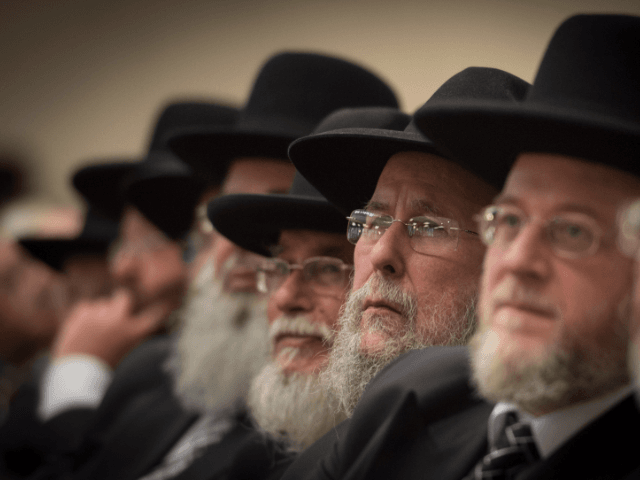
Yossi Frenkel, pictured above (right) has been an active Zaka volunteer for over 13 years. Most people find this sort of work gruesome and repelling, but not Yossi. He saw the opportunity to consistently distribute kindness that could never be repaid.  That's real chesed... true giving," explains Yossi.

It does, however, expose him continually to trauma. Yossi manages the trauma by compartmentalizing the experience. "When I receive a call, I'm no longer Yossi. I'm Zaka until I'm back home."

"But some calls are easier to detach from than others. we are, after all, human beings with emotions, and compounded exposure to evil, destruction and death takes its toll."

For help detaching emotionally and moving past each experience, Yossi phones his mother after every single Zaka mission to review the entire incident, even if it's in the middle of the night. "It gets the experience, the horror, the images - away from me." He encourages all the other Zaka volunteers to go to the counselors and debriefings, but Yossi's mother is the most effective for him.

The other ingredient that keeps Yossi grounded is focusing on the positive in life. Instead of "there was a terrorist attack", he reframes it as "the terrorist is no longer on the street - no longer a threat." Yossi delves into his outlook further, "You can take ANY incident and find strength in it. I draw strength from this rather than allowing it to drain strength from me."

It also helps that Yossi owns a restaurant. "When I return to the restaurant from a Zaka call, people are having fun and living life." This scene draws Yossi out of the world of Zaka and back to the everyday world - underwriting his positive transition back from Zaka to Yossi.

Yossi would never dream of giving up his volunteering. "II appreciate life more because of my work in Zaka, and my appreciation of life motivates my work for Zaka."


Over the years Zaka volunteers have received psycho-social care and support from ITC experts.
 
The Trauma Unit at Jerusalem's Shaarei Tzedek Hospital provides care for major traumatic injuries resulting from falls, car collisions, fires… and terror attacks. 
 
Dr. Ofer Marin is the Deputy Director General and Director of Trauma Services at Shaarei Tzedek.

The Trauma Unit is a very intense place to practice medicine. Medically, patients are in critical condition and their injuries could cover different medical specialties. Dr. Marin’s staff is fluid.

“We assemble teams and borrow specialists from the relevant departments in the hospital. We can have over 50 staff members under my direction at one time when a terror attack brings in multiple casualties, like it did this week.”

Dr. Marin schedules ongoing professional education for his staff to ensure that patients receive the advantage of the most up-to-date technology and methodology.

Working in the Trauma Unit is also intense emotionally for the medical staff, especially over the past few months as victims of intentional traumatic attacks were almost a daily occurrence. Not only are the staff members exposed to this trauma daily, they live in the area, so they are affected on two fronts. Often, a trauma nurse will hear of an attack seconds after it happens, so she can prepare for the arrival of trauma patients. Simultaneously, however, she is thinking of her husband and children who live in the area, checking her phone, in the dark about their whereabouts. It’s an incredible and constant struggle.

Dr. Marin and the staff under his direction including nurses, doctors and surgeons manage the emotional impact proactively.

“We speak about these topics regularly, and that helps a lot,” Dr. Marin explains. “We also have a psychologist on staff who specializes in PTSD. We’re the only trauma unit in Israel that has one, and it’s a tremendous benefit.”

The trauma-specialized psychologist works with patients and their families, but also works with the doctors and nurses who inevitably feel the strain from constant exposure to trauma. She gives direction and tools to all trauma unit staff to use with patients and in their own self-care.


Monday, December 28, 2015

US threatens Israel with "vindictiveness" over Iran

 
http://www.jpost.com/Jerusalem-Report/Iran-deal-fallout-436825

From JPost,

An IAEA report shows that Iran was lying about its military nuclear program, but the deal continues. US President Barack Obama (L) and Prime Minister Benjamin Netanyahu
US President Barack Obama (L) and Prime Minister Benjamin Netanyahu.
(photo credit:REUTERS)
 
THE US administration is concerned about the possibility of a new confrontation with Prime Minister Benjamin Netanyahu following the International Atomic Energy Agency’s (IAEA) latest report on Iran’s nuclear shenanigans.
 
“We hope it won’t happen,” [said] a senior US official ...“but if it does, it will be a completely different ball game. The administration ...will be vindictive.”

In November, the IAEA published a report on Iran’s past nuclear activities, also known as the “Possible Military Dimension” (PMD). The long-awaited report was supposed to determine and conclude whether Iran had been actively involved in acquiring and mastering the expertise to assemble a nuclear bomb.

The report, however, is somewhat inconclusive and leaves all the parties dissatisfied.

However, one thing is certain.

The process of further implementing the nuclear deal between Iran and the world powers signed in July will not be disrupted.

According to the agreement, also known as the “Joint Comprehensive Plan of Action” (JCPA), Iran’s nuclear program will be scaled down, restricted and limited for 10 to 15 years.

Iran must, as soon as possible – around spring 2016 – dismantle uranium-enrichment sites in Natanz and Fordow, including 14,000 centrifuges, and remain with only 6,000 spinning machines. Iran is also required to dismantle and redesign its nuclear reactor in Arak, where it intended to produce plutonium, and to fully cooperate with the IAEA and to be under its intrusive inspection regime. Accordingly, the economic sanctions – the most crippling of which were imposed on Iran’s oil and gas sector ‒ will be gradually lifted.

An important aspect of the talks that led to the JCPA deal was the PMD issue. In fact, it was because of past suspicions that Iran had carried out illegal nuclear military activities and tried to deceive the world that the UN Security Council and subsequently the international community imposed in 2006 crippling economic sanctions on the Islamic Republic.

Iran has claimed all these years that its nuclear program is solely for civilian purposes.

But the IAEA report’s findings show that Iran was lying. The report clearly states that Iran had a military nuclear program until 2003 and even probably beyond until 2009.

This included work in the field of “weaponization” – testing a chain reaction and detonation of explosives ‒ the last stage in assembling a nuclear bomb.


A KEY installation in the Iranian weaponization program was Parchin, a military base not far from Tehran. For years, Iran refused to allow IAEA inspectors any access to that base. Only after signing the agreement with world powers five months ago was partial and limited access permitted.

The IAEA arrived in Parchin and directed its Iranian counterparts on where and how to collect samples of soil, water and vegetation and how to seal them to prevent tampering. But the actual collection and sampling was carried out by Iranians with IAEA inspectors watching closely and filming the work.

Those who opposed the deal – Republicans in the US and Netanyahu in Israel ‒ argued that the sampling process would not be sufficiently reliable and leaves room for further Iranian cheating and deception. Yet, it turned out that, despite all that, the IAEA was not deceived and amassed enough evidence about Iran’s nuclear-military past.

... the report confirms Israeli intelligence assessments by the Mossad and Military Intelligence, as well as CIA estimates, that Iran was conducting weaponization tests.

Nevertheless, the IAEA report will not block implementation of the world powers’ nuclear deal with Iran. This is because the deal is not conditional on the IAEA report and doesn’t contain any clauses that categorically and unequivocally demand of Iran full transparency and revelation of its nuclear past, but only its present and future ones.


...The report disappoints Iranian President Hassan Rouhani and those in Iran who supported and pushed for the deal. They hoped that Iran would be given a clean sheet and the PMD “file” would be closed forever.

That didn’t happen.

...The report also seems to back up Netanyahu’s claim that Iran cannot be trusted and that the nuclear deal was a historic mistake.

This is the background to fears in the US administration that sooner or later – certainly before the final implementation of the JCPA next spring – Republican lawmakers will try, once again, to sabotage the deal.

And administration sources are expressing their concern that, once again, Netanyahu will jump onto the Republican bandwagon.

Last April, three months before the nuclear deal was signed, Netanyahu, in an unprecedented move, was invited by John Boehner, then the Republican speaker of the house, to address Congress. While the Republicans just wanted to embarrass the president, Netanyahu hoped to torpedo the deal. But by dancing to the tunes of the Republican Party – its major donor is casino mogul Sheldon Adelson, a friend of Netanyahu – the prime minister was thought to be interfering in US policy and siding with Obama’s opponents.

Both the Republicans and Netanyahu were outmaneuvered by Obama, who was determined to ensure that the nuclear deal happened. However, Netanyahu never publicly conceded defeat and he continues to describe the deal as a “bad” one.

IN NOVEMBER, Netanyahu met Obama in Washington and adopted a conciliatory tone, and the two seemed to mend their differences.

But “Obama didn’t forget and didn’t forgive,” US sources say. After Netanyahu’s partisan performance in Congress, Obama made a calculated decision not to retaliate against Netanyahu and Israel. Nevertheless, according to the sources, if Netanyahu repeats his anti-deal, anti-Obama behavior, “this time there will undoubtedly be a fierce reaction and retribution will follow accordingly.”

The US sources admit that even in such a worst-case scenario US military aid to Israel, currently $3.1 billion, will not be affected.

But, they point out that Netanyahu, in his meeting with Obama, asked for additional funds as “compensation” for the nuclear deal. Israel is concerned that once sanctions are lifted and money begins pouring in to revive the Iranian economy, some of it will be diverted to further sponsor anti-Israel terror groups such as Hezbollah and Hamas, and upgrade the Iranian armed forces.

The two leaders agreed to form a joint commission to discuss the Israeli request for additional aid. “In case Netanyahu goes wild again, we may stop or suspend or delay the talks,” the sources warned....

Jews and Christians are Partners

From Breitbart, 17 Dec 2015, by Thomas D. Williams, Ph.D.:


A group of prominent Orthodox rabbis in Israel, the United States and Europe have issued a historic public statement affirming that Christianity is “the willed divine outcome and gift to the nations” and urging Jews and Christians to “work together as partners to address the moral challenges of our era.”

“Jesus brought a double goodness to the world,” the statement reads. “On the one hand he strengthened the Torah of Moses majestically” and on the other hand “he removed idols from the nations,” instilling them “firmly with moral traits.”

This year 2015 marks the 50th anniversary of Nostra Aetate, the declaration issued in 1965 by the Second Vatican Council, which marked a watershed in Jewish-Christian relations.

In language unusual for its day, Nostra Aetate stated that “God holds the Jews most dear,” stressed the great “spiritual patrimony common to Christians and Jews,” and condemned “hatred, persecutions, displays of anti-Semitism, directed against Jews at any time and by anyone.”

Now, a group of Jewish leaders has responded in kind, expressing their desire to accept “the hand offered to us by our Christian brothers and sisters.”

“Christians are congregations that work for the sake of heaven who are destined to endure, whose intent is for the sake of heaven and whose reward will not denied,” the text reads.

The statement bears the title, “To Do the Will of Our Father in Heaven: Toward a Partnership between Jews and Christians,” and is signed by over 25 prominent Orthodox rabbis, who invite fellow Orthodox rabbis to join in signing the statement.

“Now that the Catholic Church has acknowledged the eternal Covenant between G-d and Israel, we Jews can acknowledge the ongoing constructive validity of Christianity as our partner in world redemption, without any fear that this will be exploited for missionary purposes,” it says.
Echoing recent words by Pope Francis, the document states: “We are no longer enemies, but unequivocal partners in articulating the essential moral values for the survival and welfare of humanity.”

“Neither of us can achieve G-d’s mission in this world alone,” it says.

According to Rabbi Shlomo Riskin, one of the statement’s initiators, the “real importance of this Orthodox statement is that it calls for fraternal partnership between Jewish and Christian religious leaders, while also acknowledging the positive theological status of the Christian faith.”

“This proclamation’s breakthrough is that influential Orthodox rabbis across all centers of Jewish life have finally acknowledged that Christianity and Judaism are no longer engaged in a theological duel to the death and that Christianity and Judaism have much in common spiritually and practically. Given our toxic history, this is unprecedented in Orthodoxy.” said Rabbi Dr. Eugene Korn, Academic Director of CJCUC.

Israel 'has no choice' but to expose foreign-funded NGOs


From A7, 27 Dec2015, by Ari Soffer:

...Knesset gears up for vote to force foreign-funded NGOs to reveal source of funds ...[because] EU [is] subverting Israeli democracy.

Justice Minister Ayelet Shaked proposed the bill
Miriam Alster/Flash 90

European states' underhanded funding of radical-left Israeli NGOs, with the express purpose of undermining Israeli government policy, necessitates legislation to force those NGOs to reveal the sources of their funding...

Just hours before a Ministerial Committee on Legislation vote on a bill to force NGOs funded by foreign states to declare their sources of income, the NGO Monitor watchdog - which previously opposed such measures - has now said the initiative may be necessary.

In a statement Sunday morning, NGO Monitor said that
"legislative proposals, such as the one introduced by Justice Minister Ayelet Shaked and discussed today (Sunday) by the government, might be unavoidable if European countries continue to fund anti-peace groups through secretive processes."
The bill in question is the latest incarnation of a string of failed initiatives - staunchly opposed by Arab and left-wing parties - to legally require NGOs that receive funding from foreign governments to register as "foreign agents."

...NGO Monitor has consistently opposed such measures, arguing instead in favor of a campaign - which it has been leading - to convince European officials to recognize that funding such organizations actually undermines the possibility of peace in the region.

But the group's head now says it has become clear that EU states have no intention of ending funding of extreme anti-Israel groups, regardless of the ultimate consequences.

"I have previously opposed various proposals to penalize Israeli political NGOs that receive millions of shekels from foreign governments (a total of 135 million NIS has been reported, January 2012-August 2015) for use in promoting false allegations of war crimes and fueling boycotts," said Professor Gerald Steinberg, president of NGO Monitor.  

"My hope was that the public debate and exposure of the facts, both in Israel and among the European governments, media, and parliaments that provide the money, would lead to changes in policy. But without action by European funders, the Israeli government may have no choice but to act."

While opponents of the bill claim it amounts to an attack on freedom of speech, supporters note it does no such thing; the bill would not ban any NGO or limit their activities, but would merely bring transparency levels for state-funded NGOs in-line with those for privately-funded ones.

"Unlike private funding for NGOs, which is generally transparent to comply with regulations in the donors’ home countries, foreign government processes which fund NGOs are often secret and violate national sovereignty," NGO Monitor further noted.

"Israel cannot legislate rules for Europe, but it can regulate Israeli NGOs, and demand foreign donations be made public and known – without limiting such donations or impeding freedom of speech."

"The real problem is in Europe, with irresponsible funding practices, not in Israel," continued Steinberg. "When European governments try to short-circuit Israeli democracy, they should not be surprised when there is pushback."

...and from The US Department of Justice:

The Foreign Agents Registration Act (FARA) was enacted in 1938.

FARA is a disclosure statute that requires persons acting as agents of foreign principals in a political or quasi-political capacity to make periodic public disclosure of their relationship with the foreign principal, as well as activities, receipts and disbursements in support of those activities. 

Disclosure of the required information facilitates evaluation by the government and the American people of the statements and activities of such persons in light of their function as foreign agents.

The FARA Registration Unit of the Counterintelligence and Export Control Section (CES) in the National Security Division (NSD) is responsible for the administration and enforcement of the Act.

It is time for donors to the New Israel Fund to stop funding the enemies of the Jewish state.

From JPost, 24 Dec 2015, by GEORGE BIRNBAUM*, HANK SHEINKOPF**, RONN TOROSSIAN***:

...There is room for views on the Left and the Right, whether we agree or not, as long as those ideals are rooted in loyalty and fairness.

There are certain opinions, however, that we cannot accept: those rooted in deception, intended to cause harm, yet presented under the guise of legitimate concern. Views that lead to actions which undermine the safety and security of Israel and the Jewish people cannot be welcomed, nor given credence, much less financial support, by those who believe in Israel as a Jewish nation.

Actions that seek to undermine the men and women who serve in the IDF; ones that would have Israeli citizens arrested in foreign countries and charged with war crimes; ones that would see Israel brought before the International Court of Justice at The Hague, are unacceptable.

Additionally, those who would encourage and support a boycott of Israel, painting the country and its people as an apartheid nation and people, cannot be seen as beneficial in any way, as they only help to make Israel appear illegitimate to world bodies and the court of public opinion.

This, of course relates to the ongoing debate in Israel about the NGO Shovrim Shtikah – Breaking the Silence, and its primary benefactor in the United States, the New Israel Fund. Breaking the Silence it has recently been revealed is simultaneously funded by Palestinian entities opposed to the existence of the Jewish state.
In May 2015, Breaking the Silence provided 57 testimonies against IDF soldiers for a report intended to prove that Israel not only used excessive force during the 2014 Operation Protective Edge, but callously targeted Palestinian women, children and non-combatants.

It has also been revealed that report was partly commissioned by the Palestinian foundation The Human Rights and International Humanitarian Law Secretariat, operating in Ramallah. The Secretariat noted in a report published in 2015 that it paid Breaking the Silence to bring it testimonies against the IDF.
Additionally, Hamas, at no less than nine events it held worldwide, used the Breaking the Silence report to promote the idea of bringing Israelis up on war crimes charges. Two were held in Scotland, under the auspices of MAP (Medical Aid for Palestine) and the anti-Israel Scottish National Party. Other events took place in Zurich, Luxembourg, Madrid, and in several places in the United States, under the banner of the New Israel Fund.
Following the intense advocacy of the Hamas-backed groups, last month an IDF reservist who served in the Operation Protective Edge was detained over accusations of war crimes after landing in Britain on a business trip. He was released after Israel’s embassy intervened, but it confirmed that groups are working hard to expose individual Israeli citizens to international scrutiny.

Last week, 20 IDF combat soldiers began a campaign to urge donors to groups opposed to the IDF – and funded by the New Israel Fund in America – to recognize the damage their money is causing. Letters were delivered to more than 100 major donors to the New Israel Fund, including Barbara and Eric Dobkin, Murray Koppelman, the Leichtag Foundation, the Jewish Communal Fund, and Rabbi Gordon Tucker of Temple Israel of White Plains, New York.

Offering the benefit of the doubt, the letter stated, “The goal that you sought to achieve with your donation was to support Zionism and support organizations working for human rights and against anti-democratic activities. You support organizations that you believe work towards creating a better, saner, more democratic, and more moral Israel.”

They called on these donors to use their clout to “[d]emand that the New Israel Fund cease and desist from supporting organizations that defame IDF soldiers, in Israel and around the world. These include organizations such as Breaking the Silence, B’Tselem, Yesh Din, the Public Committee Against Torture in Israel (PCATI), Gisha – Legal Center for Freedom of Movement, and Machsom Watch.”
It cannot be ignored that Defense Minister Moshe Ya’alon forbade the entrance of Breaking the Silence to all IDF bases, and Education Minister Naftali Bennett announced that he forbade the entrance of Breaking the Silence to all schools.

Within the US Jewish community there is no shortage of opinions. There are issues of religion which our rabbis and leaders argue over.

When it comes to the State of Israel, however, the Israel Defense Forces must be a holy entity for our people. When work delegitimizes the State of Israel, seeks to have it citizens threatened as they travel around the world, and causes the military to be anything less than a force of strength and security against Israel’s enemies, it harms the Jewish state.

It is time for donors to the New Israel Fund to stop funding the enemies of the Jewish state.

*George Birnbaum is a former chief of staff to Prime Minister Benjamin Netanyahu.

**Hank Sheinkopf, CEO of Sheinkopf Communications, is a political strategist who has worked on campaigns in four continents. His clients have included former president Bill Clinton.

***Ronn Torossian is CEO of a top 20 US PR agency, and author of For Immediate Release.

Thursday, December 24, 2015

Egyptian expert says Muslim claims over al-Aksa mosque are baseless.


Egyptian philosopher, expert on Arabic and Islamic studies, says Muslim claims over al-Aksa mosque are baseless.


screenshot

Dr. Youssef Ziedan was insistent on pronouncing the words "Beit Hamikdash," or, Temple in Jerusalem, clearly and in Hebrew.


An Egyptian philosopher and expert on  Arabic and Islamic studies,  Ziedan sat in the Egyptian CBC studios and explained at length to his host why, in his opinion, Muslim claims over al-Aksa mosque in Jerusalem are baseless. The CBC interviewer, Khairy Ramadan, challenged Zieden while taking in his words eagerly.


..."Beit Hamikdash is a Hebrew term," Ziedan insisted in his interview. "Hence, in my opinion, the al-Aksa mosque isn't legitimate. Al-Kuds, the temple, is an ancient Hebrew word, and Muslims adopted the word." He turned to his Muslim brethren and said: "You're annexing the city, annexing the word, and claiming that it is holy to you. But from where exactly? Can you tell a Jew that Jerusalem is not his?"

... Youssef Ziedan, [is] a Muslim from birth, who has never been to Israel or been a particular fan of the Jewish nation, and remains one of the most important researchers on religions in Egyptian academia.

Jerusalem is not explicitly referenced in the Koran. In their claims on the Temple Mount, Muslims reference the term "Al-Aksa Mosque," which does appear in the holy book, sans a geographic pinpoint. Ziedan claims that interpretation claiming that the mosque is situated precisely in Jerusalem, is baseless.

The Muslims base their claims on the first verse in chapter 17 of the Koran, titled, "The Night Journey," which reads: "Glory be to Him, who carried His servant by night from the Holy Mosque to the Further Mosque."


Based on the Muslim faith, the verse speaks of a miracle bestowed on Muhammad by God, in which the messenger (Muhammad), was led in the middle of the night from the mosque in the city of Mecca (the "Holy mosque) to a mosque in another city (the "further mosque), further away, believed to be al-Aqsa mosque, which, for generations, was interpreted as having been located in Jerusalem.

Ziedan however, has his own, alternative theory. He claims that the phrase "Al Aksa" refers to a mosque on the outskirts of the city of Ta'if, west of Mecca. He bases his hypothesis on the teachings of the ancient Muslim historian Al-Waqidi, born 100 years after the appearance of Muhammad, who made similar claims.

"Al Aksa mosque didn't exist back then," said Ziedan, "there was no city named al-Quds and modern teachings claiming this are disastrous."

Khairy Ramadan challenged Ziedan, and asked him why he believes Muslims today insist on the holiness of Jerusalem. Ziedan attributed the stubbornness to politics.

"The religious aspect in the Arab-Israeli conflict is intentionally political."
Ziedan claimed that Al-Aksa mosque in Jerusalem was built by Abd al-Malik ibn Marwan, the 5th caliph of the Umayyad Dynasty in Damascus, 73 years after the founding of Islam. If this is true, then Al-Aksa could not have been in existence when Muhammad made the overnight journey in the Koran's 17th chapter. Ziedan said that Marwan built al-Aksa in order to infringe on the prestige of Mecca, which at the time was controlled by his political enemies.

"Al-Aqsa mosque was a pawn in a political game, led by ibn Marwan," said Ziedan.

Ziedan's controversial interview surfaced at a sensitive time - a time when Palestinians and Israelis are engaging in violent confrontations in the West Bank, while the Muslim world is echoing cries of concern over Al-Aksa, claiming that it is in danger due to Jewish presence on site.

In his CBC appearance, Ziedan went further, clearing the Israeli government of responsibility from Palestinian claims that it was at fault for the 1982 massacres in the Palestinian refugee camps of Sabra and Shatila. Ziedan said that, since the massacre was carried out by the Kataeb Party, also known as Phalange - predominantly Christian Lebanese and right-wing - there is no reason to blame Ariel Sharon, Minister of Defense at the time.

The Egyptian newspaper, Al-Dustour, mocked Ziedan for these comments and coined him as the "occupation's defense attorney."

A Regular Critic

Dr. Youssef Ziedan, 57, a lecturer at the University of Alexandria, is a philosopher and expert in Arabic and Islamic studies. He is secular and outwardly opposes the Muslim Brotherhood. Ziedan has written a number of novels in the past decade, many of which have been best-sellers in the Arab world. His most known work, titled Azazeel, has been translated into 16 languages and has awarded Ziedan international recognition.

His most recent CBC interview is not the first instance at which he speaks up against mainstream Islam.

In a televised interview a year ago, Ziedan proposed that Egypt reevaluate its relationship with the Jewish nation. He explained that a historic rivalry with Judaism negatively influenced Muslims, and, in modern days, is used by politicians as a means of manipulation in order to seed provocation. "Whoever wants to win over the public, must curse Israelis" Ziedan said, "but after they rise to power, they treat them nicely."

"It's idiotic," he explained, "and exploits the ignorance of the public."

Reactions to Ziedan


The Egyptian public remained relatively calm and unmoved following Ziedan's claims.

...Despite harsh criticism, no one demanded that Zeidan face extreme, harsh repercussions for his statements - such as revoking his position at the university, or inflicting physical punishment on him. No court complaint was filed against him, and should one be filed, it is likely that it will mysteriously disappear.

Translated by Coral Braun.

Wednesday, December 23, 2015

IDF Soldiers ask NY Jews: Don’t aid terror supporters

From Behind the News (Blog), 21 Dec 2015:

img645740 (1)

An unusual letter from 20 IDF reservists, including officers, was delivered Monday to Rabbi Gordon Tucker and the Leadership of Temple Israel of White Plains, New York, regarding the community’s donations to the New Israel Fund. Similar letters were sent to 100 other NIF donors.

The letter notes that the community donates significantly to the New Israel Fund, and asks that the community demand that the New Israel Fund cease supporting organizations that defame IDF soldiers, in Israel and around the world, and protect terrorists....

The full text of the letter follows:
“In recent years, you have donated significantly to numerous Israeli organizations and associations. The goal that you sought to achieve with your donation was to support Zionism and support organizations working for human rights and against anti-democratic activities. You support organizations that you believe work towards creating a better, saner, more democratic, and more moral Israel.
“The reason why you donate funds is not in doubt, nor has it ever been. However, the funds you donate are not being used to serve the purpose for which you donated them. We also know that you donate to the New Israel Fund and we wholeheartedly believe that you love the New Israel Fund, support its activities, and want to strengthen it. We won’t argue the point.
“However, there is one thing we ask, and, as active-duty and reserve soldiers in the Israel Defense Forces, we feel it is our right to ask.
“Please demand that the New Israel Fund cease and desist from supporting organizations that defame us IDF soldiers, in Israel and around the world.  These include organizations such as Breaking the Silence, B’Tselem, Yesh Din, the Public Committee Against Torture in Israel (PCATI), Gisha – Legal Center for Freedom of Movement, and Machsom Watch.
“Please demand that the New Israel Fund cease and desist from supporting organizations which protect terrorists who have attacked and stabbed Israelis, even in the current wave of terror which has been plaguing Israel for over a year. These organizations, which are supported by the New Israel Fund, include: B’Tselem, Breaking the Silence, the Association for Civil Rights in Israel (ACRI), HaMoked: Center for the Defense of the Individual, Gisha – Legal Center for Freedom of Movement, Bimkom – Planners for Planning Rights, Ta’ayush, Adalah, Physicians for Human Rights – Israel (PHR-IL), and Rabbis for Human Rights.
“Just this week, Israel’s Minister of Defense, Moshe Ya’alon, forbade the entrance of Breaking the Silence to all IDF bases. This is an extraordinary move expressing how deeply Israeli society perceives that is has been hurt by this organization. Israel’s Minister of Education, Naftali Bennett, announced that he forbade the entrance of Breaking the Silence to all Israeli schools.
“Those same organizations are delegitimization organizations. Their purpose is solely to defame the soldiers of the Israeli Defense Forces and the State of Israel around the world. The activities of Breaking the Silence are extremely anti-Israeli and are perceived as such by the majority of Israeli society.
“The organization works in various ways against Israel: They lie both within Israel and around the world, claiming that many IDF soldiers are ‘war criminals.’ Several of these organizations deal with promoting lawsuits against IDF soldiers and officers in Israel and around the world. They hold events at the United Nations and participate in conventions held by the European Union, where they falsely present the State of Israel as an apartheid state, a state that practices ethnic cleansing, and other horrifying lies. In interviews to the international media they claim that the soldiers of the IDF are war criminals, that the State of Israel is a war criminal. They defend terrorists in court, even those who were caught in the act, and file petitions for their release and against revoking their Israeli citizenship. These organizations take legal action to prevent the destruction of terrorists’ houses by the state, and defame the state of Israel in every arena possible.
“Their actions, the things they say and write against the State of Israel and IDF soldiers in the foreign press feeds anti-Israel and anti-Zionist campaigns, and even terror organizations such as Hamas quote from things Breaking the Silence say during Hamas actions against the State of Israel on the international stage.
“The worst of it is not that you support and fund these organizations, but that so do European countries and Palestinian foundations. Palestinians fund their actions.  The question is whether you, dear donor, knew of this activity. Does it reflect your values and do you agree that this is the use for the money which you donate to these organizations?
“Dear lover of Israel – don’t let these Foreign Agent organizations, funded by foreign governments, tear away at Israeli democracy. Don’t let them tamper with the State of Israel.
“With regards,
Sergeant Bar Shalev, Judea and Samaria Division
Air Force Officer Daniel Salame
Lieutenant Ofir Levine, Engineering Corps
​Staff Sergeant Ori Moskovich, Unit 926
Sergeant Major Matan Milles, 3 Squadron, The Navy
Staff Sergeant Chaim Prince, Engineering Corps
Staff Sergeant Aviad Harush, Unit 7002
Staff Sergeant Ilana Valdman, The Home Front Command
First Sergeant Hanani Ladel, Regiment 188
Staff Sergeant Almog Qashty, The Military Police
​Sergeant Major Ze’ev Lev, Unit 7012
Staff Sergeant Eli Baraz, Regional Brigade Binyamin
Staff Sergeant Matan Haratz, Unit 710
Sergeant Major Lev Liberman, Central Command
Sergeant Major Matan Arad, Supply Unit 91
Staff Sergeant Naama Carmel, Intelligence
Staff Sergeant Tzur Ofir, Unit 9135
Staff Sergeant Ariel Iskov, Unit 868
Staff Sergeant Uria Peled, Air Defense Forces
Sergeant Major Nadav Simantov, Unit 43

Fatah Hails Terror Master Samir Kuntar

From Algemeiner, 21 December 2015, by :
        

The video clip of a speech Samir Kuntar gave in Lebanon, posted on Fatahs off
The video clip of a speech Samir Kuntar gave in Lebanon, posted on Fatah’s official Facebook page on the day of his funeral. Photo: Screenshot.
The official Facebook page of the Fatah political faction, headed by Palestinian Authority President Mahmoud Abbas, on Monday lauded Hezbollah official and arch-terrorist Samir Kuntar, assassinated on Saturday night in Damascus...

Fatah uploaded a video clip of a speech Kuntar gave in Lebanon, to coincide with his funeral there on Monday.

In the video, Kuntar says,
“I returned today from Palestine, but believe me… I am prepared to go back to Palestine.”

Among the comments below the posting are sentiments such as, “Allah rest his soul.”

...this honoring of Kuntar – whom Israel is accused of assassinating – comes not from terrorist organizations, such as Hamas in Gaza or Hezbollah in Lebanon and Syria, but rather from Fatah, considered by the international community to be moderate, two-state-solution-seekers.

“This is an extreme case where every civilized person must be appalled by a terrorist who took credit for killing a four-year-old child,” said Dr. Dan Schueftan, director of the National Security Studies Center at Haifa University.

Schueftan, an expert on Mideast affairs, was referring to Kuntar’s particularly heinous slaughter of an Israeli family in Nahariya in 1979, when he was 16 years old.

But, Schueftan told The Algemeiner,
“It turns out that nothing is too low or too barbaric — even for the mainstream of the Palestinian national movement — to adulate when it comes to killing innocent Jews. Though Fatah at the moment is reluctant to use massive terrorism, for fear of Israeli counter-measures, it still educates its public to call a child-murderer a hero and a saint.”

Kuntar served 30 years in an Israeli jail, until his release in 2008, as part of a prisoner swap with Hezbollah, which returned the bodies of IDF reservists Ehud Goldwasser and Eldad Regev, kidnapped and killed during the 2006 Second War in Lebanon, in exchange for five Palestinian terrorists.

Both Shi’ite and Sunni jihad are on the march

From JPost, 17 Dec 2015, by Caroline Glick:

For the first time in a decade, Americans are beginning to think seriously about foreign policy

 At some point between 2006 and 2008, the American people decided to turn their backs on the world. Between the seeming futility of the war in Iraq and the financial collapse of 2008, Americans decided they’d had enough.

In Barack Obama, they found a leader who could channel their frustration. Obama’s foreign policy, based on denying the existence of radical Islam and projecting the responsibility for Islamic aggression on the US and its allies, suited their mood just fine. If America is responsible, then America can walk away. Once it is gone, so the thinking has gone, the Muslims will forget their anger and leave America alone.
 
Sadly, Obama’s foreign policy assumptions are utter nonsense. America’s abandonment of global leadership has not made things better. Over the past seven years, the legions of radical Islam have expanded and grown more powerful than ever before. And now in the aftermath of the jihadist massacres in Paris and San Bernadino, the threats have grown so abundant that even Obama cannot pretend them away.
 
As a consequence, for the first time in a decade, Americans are beginning to think seriously about foreign policy. But are they too late? Can the next president repair the damage Obama has caused?
 
The Democrats give no cause for optimism. Led by former secretary of state Hillary Clinton, the Democratic presidential hopefuls stubbornly insist that there is nothing wrong with Obama’s foreign policy. If they are elected to succeed him, they pledge to follow in his footsteps.
 
On the Republican side, things are more encouraging, but also more complicated.
 
Republican presidential hopefuls are united in their rejection of Obama’s policy of ignoring the Islamic supremacist nature of the enemy. All reject the failed assumptions of Obama’s foreign policy.
All have pledged to abandon them on their first day in office. Yet for all their unity in rejecting Obama’s positions, Republicans are deeply divided over what alternative foreign policy they would adopt.
 
This divide has been seething under the surface throughout the Obama presidency. It burst into the open at the Republican presidential debate Wednesday night.
The importance of the dispute cannot be overstated.
 
Given the Democrats’ allegiance to Obama’s disastrous policies, the only hope for a restoration of American leadership is that a Republican wins the next election. But if Republicans nominate a candidate who fails to reconcile with the realities of the world as it is, then the chance for a reassertion of American leadership will diminish significantly.
 
To understand just how high the stakes are, you need to look no further than two events that occurred just before the Wednesday’s Republican presidential debate.
 
 
Iran enters the home straight.
On Tuesday, the International Atomic Energy Agency voted to close its investigation of Iran’s nuclear program. As far as the UN’s nuclear watchdog is concerned, Iran is good to go.
The move is a scandal. Its consequences will be disastrous.
 
The IAEA acknowledges that Iran continued to advance its illicit military nuclear program at least until 2009. Tehran refuses to divulge its nuclear activities to IAEA investigators as it is required to do under binding UN Security Council resolutions.
 
Iran refuses to allow IAEA inspectors access to its illicit nuclear sites. As a consequence, the IAEA lacks a clear understanding of what Iran’s nuclear status is today and therefore has no capacity to prevent it from maintaining or expanding its nuclear capabilities. This means that the inspection regime Iran supposedly accepted under Obama’s nuclear deal is worthless.
 
The IAEA also accepts that since Iran concluded its nuclear accord with the world powers, it has conducted two tests of ballistic missiles capable of carrying nuclear weapons, despite the fact that it is barred from doing so under binding Security Council resolutions.
 
But really, who cares? Certainly the Obama administration doesn’t. The sighs of relief emanating from the White House and the State Department after the IAEA decision were audible from Jerusalem to Tehran.
 
The IAEA’s decision has two direct consequences.
 
First, as Iranian President Hassan Rouhani said Wednesday, it paves the way for the cancellation of the UN’s economic sanctions against Iran within the month.
 
Second, with the IAEA’s decision, the last obstacle impeding Iran’s completion of its nuclear weapons program has been removed. Inspections are a thing of the past. Iran is in the clear.
 
As Iran struts across the nuclear finish line, the Sunni jihadists are closing their ranks.
Hours after the IAEA vote, Turkey and Qatar announced that Turkey is setting up a permanent military base in the Persian Gulf emirate for the first time since the fall of the Ottoman Empire a century ago. Their announcement indicates that the informal partnership between Turkey and Qatar on the one side, and Hamas, the Muslim Brotherhood and Islamic State on the other hand, which first came to the fore last year during Operation Protective Edge, is now becoming a more formal alliance.
Just as the Obama administration has no problem with Iran going nuclear, so it has no problem with this new jihadist alliance.

During Operation Protective Edge, the administration supported this jihadist alliance against the Israeli-Egyptian partnership. Throughout Hamas’s war against Israel, Obama demanded that Israel and Egypt accept Hamas’s cease-fire terms, as they were presented by Turkey and Qatar.

Since Operation Protective Edge, the Americans have continued to insist that Israel and Egypt bow to Hamas’s demands and open Gaza’s international borders. The Americans have kept up their pressure on Israel and Egypt despite Hamas’s open alliance with ISIS in the Sinai Peninsula.

So, too, the Americans have kept Egyptian President Abdel Fattah al-Sisi at arm’s length, and continue to insist that the Muslim Brotherhood is a legitimate political force despite Sisi’s war against ISIS. Washington continues to embrace Qatar as a “moderate” force despite the emirate’s open support for the Muslim Brotherhood, Hamas and ISIS.

As for Turkey, it appears there is nothing Ankara can do that will dispel the US notion that it is a credible partner in the war on terror. Since 2011, Turkey has served as Hamas’s chief state sponsor, and as ISIS’s chief sponsor. It is waging war against the Kurds – the US’s strongest ally in its campaign against ISIS.

In other words, with the US’s blessing, the forces of both Shi’ite and Sunni jihad are on the march.

And the next president will have no grace period for repairing the damage.

Although the Republican debate Wednesday night was focused mainly on the war in Syria, its significance is far greater than one specific battlefield.

And while there were nine candidates on the stage, there were only two participants in this critical discussion.


Rafael Edward “Ted” Cruz and Marco Antonio Rubio

Sens. Marco Rubio and Ted Cruz faced off after weeks of rising contention between their campaigns.

In so doing, they brought the dispute that has been seething through their party since the Bush presidency into the open.

Rubio argued that in Syria, the US needs to both defeat ISIS and overthrow President Bashar Assad.
Cruz countered that the US should ignore Assad and concentrate on utterly destroying ISIS. America’s national interest, he said, is not advanced by overthrowing Assad, because in all likelihood, Assad will be replaced by ISIS.

Cruz added that America’s experience in overthrowing Middle Eastern leaders has shown that it is a mistake to overthrow dictators. Things only got worse after America overthrew Saddam Hussein and supported the overthrow of Muammar Gaddafi and Hosni Mubarak.

For his part, Rubio explained that since Assad is Iran’s puppet, leaving him in power empowers Iran. The longer he remains in power, the more control Iran will wield over Syria and Lebanon.

The two candidates’ dispute is far greater than the question of who rules Syria. Their disagreement on Syria isn’t a tactical argument. It goes to the core question of what is the proper role of American foreign policy.

Rubio’s commitment to overthrowing Assad is one component of a wider strategic commitment to fostering democratic governance in Syria. By embracing the cause of democratization through regime change, Rubio has become the standard bearer of George W. Bush’s foreign policy.

Bush’s foreign policy had two seemingly contradictory anchors – a belief that liberal values are universal, and cultural meekness.

Bush’s belief that open elections would serve as a panacea for the pathologies of the Islamic world was not supported by empirical data. Survey after survey showed that if left to their own devices, the people of Muslim world would choose to be led by Islamic supremacists. But Bush rejected the data and embraced the fantasy that free elections lead a society to embrace liberal norms of peace and human rights.

As to cultural meekness, since the end of the Cold War and with the rise of political correctness, the notion that America could call for other people to adopt American values fell into disrepute. For American foreign policy practitioners, the idea that American values and norms are superior to Islamic supremacist values smacked of cultural chauvinism.

Consequently, rather than urge the Islamic world to abandon Islamic supremacism in favor of liberal democracy, in their public diplomacy efforts, Americans sufficed with vapid pronouncements of love and respect for Islam.

Islamic supremacists, for their part stepped into the ideological void without hesitation. In Iraq, the Iranian regime spent hundreds of millions of dollars training Iranian-controlled militias, building Iranian-controlled political parties and publishing pro-Iranian newspapers as the US did nothing to support pro-American Iraqis.

Although many Republicans opposed Bush’s policies, few dared make their disagreement with the head of their party public. As a result, for many, Wednesday’s debate was the first time the foundations of Bush’s foreign policy were coherently and forcefully rejected before a national audience.

If Rubio is the heir to Bush, Cruz is the spokesman for Bush’s until now silent opposition. In their longheld view, democratization is not a proper aim of American foreign policy. Defeating America’s enemies is the proper aim of American foreign policy.

Rubio’s people claim that carpet bombing ISIS is not a strategy. They are right. There are parts missing from in Cruz’s position on Syria.

But then again, although still not comprehensive, Cruz’s foreign policy trajectory has much to recommend it. First and foremost, it is based on the world as it is, rather than a vision of how the world should be. It makes a clear distinction between America’s allies and America’s enemies and calls for the US to side with the former and fight the latter.

It is far from clear which side will win this fight for the heart of the Republican Party. And it is impossible to know who the next US president will be.

But whatever happens, the fact that after their seven-year vacation, the Americans are returning the real world is a cause for cautious celebration.



Tuesday, December 22, 2015

US lawmakers condemn EU labelling of settlement products

 
http://www.timesofisrael.com/us-lawmakers-condemn-eu-settlement-product-labeling/

From The Times of Israel, 17 Dec 2015, by Rebecca Shimoni Stoil:

Bipartisan resolution accuses Europe of encouraging boycott of Israel, setting back prospects for peace

Palestinian workers on November 11, 2015 at a date packaging factory in the Jordan Valley in the West Bank. This produce will be labeled if exported to the EU as "Product of the West Bank (Israeli settlement)." (Melanie Lidman/Times of Israel)
 
WASHINGTON — A bipartisan group of Congress members introduced a resolution Thursday expressing staunch opposition to guidelines issued recently by the European Union mandating the labeling of products manufactured in Israeli West Bank settlements and in the Golan Heights.
 
Democratic representatives Eliot Engel and Nita Lowey, and Republicans Peter Roskam and Ed Royce – all legislators with strong pro-Israel records – co-authored the resolution. In a statement released after the resolution was submitted, the four accused the EU of advancing a general boycott of Israel.
 
The guidelines, they said, “only encourage and prompt consumers to boycott all Israeli goods.”
“This is counterproductive to the Israeli-Palestinian peace process, harmful to U.S. national security interests, and contributes to the deeply misguided anti-Israel Boycott, Divestment, and Sanctions (BDS) movement,” the four complained. “Boycotts chip away at economic integration, which negatively affects Israelis and Palestinians alike. The establishment of the European Economic Community was predicated on the notion that peace and security are achieved through trade, economic cooperation, and job creation – not boycotts and isolation. The same is true for Israelis and Palestinians.”
 
The resolution itself expresses alarm that “politically motivated acts of boycott, divestment from, and sanctions against Israel represent a concerted effort to extract concessions from Israel outside of direct negotiations between the Israelis and Palestinians, and undermines efforts to achieve a negotiated two-state solution,” a position that the sponsors wrote was itself in contravention of longstanding US policy.
 
“The United States has long opposed efforts to impose solutions to the Israeli-Palestinian conflict outside of direct negotiations between the two parties,” they noted, adding that “the United States has historically been at the forefront of combating economic pressure against Israel and has enacted legislation to counter both the Arab League Boycott of Israel and the BDS movement.”
The resolution also cited recent legislation – at both the federal and state levels — that discourage support for BDS actions, and even call for US negotiators to discourage potential trading partners from engaging in such actions.
 
It noted a law passed earlier this year as part of a trade negotiating package states that the United States should discourage potential trading partners from adopting policies to limit trade or investment relations with Israel when negotiating the Transatlantic Trade and Investment Partnership with European countries.
 
At the same time, multiple state legislatures – including Tennessee, Indiana, Illinois, South Carolina and New York — have passed laws and resolutions rejecting BDS practices, and in some cases, divesting state funds from any body that engages in BDS.
 
The text of the resolution itself calls upon all of the European governmental bodies “to oppose any boycott, divestment, or sanctions initiatives aimed at singling out Israel, to refrain from actions counterproductive to resolving the Israel-Palestinian conflict, and to work on bringing the parties back to the negotiating table.” It also encourages EU states “to exert prudence in the implementation of the European Union labeling guidelines.”
 
The legislators noted that the European Union is Israel’s largest trading partner, arguing that as such, “the European Union should play a constructive role to help bring the parties back to the negotiating table and resolve their differences, not try to extract one-sided concessions and feed into politically-motivated acts to boycott Israel.”
 
The resolution is included as part of the omnibus funding package, and is set to go through its first rounds of voting on Friday. The package is considered must-pass legislation in order to stave off the risk of a government shutdown – and has been hammered out in a series of bipartisan trade-offs.
If the resolution stays in the package, its chances of passing are considered good, since Republican Speaker of the House Paul Ryan and the Obama administration both have indicated that they hope to see the omnibus spending bill’s speedy passage.
 
Left-wing groups, such as Americans for Peace Now, have complained that throughout the past year, there has been an increase in Congressional moves that they say violate longstanding US policy differentiating between the legal status of lands claimed by Israel after the 1967 Arab-Israeli War and lands within Israel’s pre-1967 boundaries.
 
This resolution’s sponsors noted in their statement that when it came to boycott, divestment or sanctions actions, they did not in fact make any differentiation. “This resolution expresses our opposition to the EU labeling decision and all other boycott, divestment, and sanctions efforts directed against Israel or Israeli-controlled territory,” the four noted.
 
At the same time, the text of the resolution “reaffirms” Congress’s “strong support for a negotiated solution to the Israeli-Palestinian conflict resulting in two states, a democratic, Jewish State of Israel and a viable, democratic, Palestinian state, living side-by-side in peace, security, and mutual recognition.”