Tuesday, August 01, 2017

Israel and India: ..bringing "our two countries and peoples closer”

From BESA Center Perspectives Paper No. 547, July 31, 2017, by Anoop Kumar Gupta:

India-Israel defense and intelligence ties developed even before diplomatic relations were established between the countries. The establishment of diplomatic relations opened the door for greater cooperation, but relations remained low-profile until the ascendancy of Prime Minister Narendra Modi. He has given a dynamic push to India’s Israel policy. His recent, long overdue visit to Israel was centered around development-related issues and intensified the bilateral relationship.   
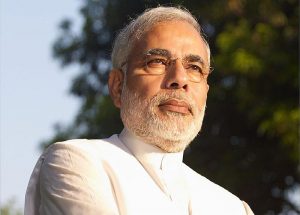

Narendra Modi

India-Israel relations have witnessed a steady upward trajectory since diplomatic relations were established in 1992. Narendra Modi’s recent visit to Israel, the first ever by an Indian prime minister, was long overdue.

Since coming to power in 2014, Modi has given a dynamic push to India’s Israel policy. Israel has emerged as a critical component of India’s grand strategic calculation under Modi. Structural and philosophical hindrances regarding Israel have been eliminated under his regime. In fully setting aside India’s ideological and historical baggage with regard to Israel, Modi has achieved a culmination of the diplomatic process that started in January 1992.

Modi’s successful visit to Israel, which took place on July 4-6, 2017, was part and parcel of India’s grand strategy for the promotion of the values of self-reliance, national development, economic growth, technological innovation, and national security. The visit was an essential part of Modi’s effort to engineer India’s rise.

Modi’s historic trip was symbolic in that it was the first-ever visit by an Indian PM to Israel, and substantive in that it will give a strong push to the countries’ already blooming bilateral ties at the operational level. The visit was formally intended to commemorate 25 years of diplomatic ties between the states, but the implications of the visit are immense.

In finally taking the step of visiting the State of Israel, Modi demonstrated that India has not only relinquished its inhibitions towards Israel but has also expressed its political will to bring their relations out of the closet. The visit gave a high profile to the bilateral relationship and shed the mindset of secret engagement.

It was a stand-alone visit, skipping the stopover in Ramallah that is a diplomatic tradition for most foreign dignitaries. 

Modi did not even mention the Palestinian question in public during his visit. The Israeli-Indian joint statement briefly emphasized “the need for the establishment of a just and durable peace in the region” and “reaffirmed support for an early negotiated solution between the sides based on mutual recognition and security arrangements”, but avoided phrases like “two-state solution” and made no mention of East Jerusalem as Palestine’s future capital. 

These omissions reflect India’s belief that the two sides should resolve their issues through bilateral negotiations, and demonstrate that India-Israel relations are no longer dependent on the Palestinian variable.

India has separated its ties with Israel and Palestinian Authority and is now trying to engage them separately. There is an indication that India will ponder every issue related to the Israel-Palestinian conflict on its merit. India has reaffirmed its support for the Palestinian cause, but is simultaneously developing a close, mutually beneficial partnership with Israel.

India’s voting behavior at UN agencies – it has abstained rather than vote against Israel – also reflects a paradigm shift. India’s Ambassador to Israel Pavan Kapoor said India has “matured”, and “it is our sense of confidence that we can deal with both relationships independently and own their own merit. We don’t see the need to hyphenate them”. This new approach opens the door to immense cooperation in many fields.

Israel gave Modi a red carpet welcome, with Israeli PM Netanyahu hailing the visit as “historic”. Departing from the normal diplomatic course, Netanyahu accompanied Modi throughout his stay in Israel. It was a rare gesture, unseen in decades, that reflects the new level of personal chemistry between the leaders. Their camaraderie, on display throughout all three days, attracted the attention of regional and global media.

Modi’s visit to Israel not only “solidified the enduring partnership” but also “raised the bilateral relationship to that of a strategic partnership”. In order to realize the full potential of bilateral partnership beyond defense and security, the countries “affirmed their intention to build a broad-based relationship” and “agreed on policy and initiatives that would reflect the goals and aspirations of both the nations”.

The focal point of this diplomatic sojourn was development. The visit focused on expanding and deepening relations beyond defense and diamonds. India and Israel expressed their resolve to develop a close partnership in the fields of “development, technology, innovation, entrepreneurship, defense and security”.

Modi is well aware that Israeli technological expertise could play a vital role in India’s rise, and visited several sites that display Israel’s innovative spirit. He witnessed cutting-edge floriculture technology at the Danzinger Dan flower farm near Tel Aviv, tasted water from a Galmobile desalination device at Dror beach near Hadera, and attended a technological innovation exhibition. Modi knows that Israel can play an instrumental role in the success of his dream projects, like Make in India, Digital India, Clean India, Clean Ganga, Smart City, Skill India, and New India.

In an attempt to give a boost to India’s agricultural development, the countries decided to establish a “Strategic Partnership in Water and Agriculture”. As per the joint statement, “this will focus on water conservation, waste-water treatment and its reuse for agriculture, desalination, water utility reforms, and the cleaning of the Ganges and other rivers using advanced water technologies”. A “Joint Working Group” is to be established aimed at doubling Indian farmers’ income.

Seven Memoranda of Understanding were signed. An MoU established the India-Israel Industrial R&D and Innovation Fund (I4F), with a contribution of US$40 million, which will promote a partnership based on the use of technology for development. The joint statement envisaged that this fund “will play a seminal role in enabling Indian and Israeli enterprises to undertake joint R&D projects leading to development of innovative technologies and products that have potential for commercial applications”.

India and Israel also agreed “to upgrade their scientific and technological collaboration by supporting joint research and development projects in the cutting-edge areas”. They signed agreements related to

  • water conservation in India, 
  • water utility reform, and 
  • a three-year work program on agriculture. 
This developmental approach was also evident in agreements signed in the field of space research. The agreements will promote cooperation in

  • atomic clocks, 
  • the GEO-LEO optical link, and 
  • electric propulsion of small satellites.


Modi’s visit is also important from a business and economic point of view. The joint statement not only recognized the importance of “fostering a wide-ranging knowledge-business partnership”, but also realized the importance of enhancing bilateral trade and investment and emphasized the need for an agreement for the Protection of Investment.

The first meeting of the India Israel CEO Forum was held in Tel Aviv on July 6. It was presided over by both prime ministers and attended by almost 30 Indian and Israeli CEOs. In a bid to boost bilateral cooperation in innovation and entrepreneurship, the joint statement tasked the India-Israel CEO Forum to come up with early recommendations. It was also decided to work on granting multiple entry visas to business people for up to five years and to start negotiation on an investment protection agreement. Israel will be the partner country for the annual Technology Summit to be held in India in 2018. During Modi’s visit, Indian and Israeli companies signed various deals worth US$4.3 billion, excluding defense. (The matter of a free trade agreement did not come up between the two states.) The CEOs expressed the hope that bilateral trade could reach US$20 billion in the next five years from the current level of about US$5 billion.

Terrorism is a menace to humanity and a threat to national development. That is why cooperation on countering terrorism was also a major takeaway of this visit. Both states are victims of terrorism and recognize that their democracies and development must be protected from it. Modi’s and Netanyahu’s meeting with ten-year-old Moshe Holtzberg symbolized their recognition of this truth. Israel categorically stated that there is no difference between Lashkar-e-Taiba and Hamas. Senior Israeli diplomat Mark Sofer commented, “the horrors coming out of Pakistan, from Lashkar-e-Taiba, are known, and we support India’s right to defend itself against terrorism as Israel has the same right”. The joint statement stressed their “strong commitment to combat” terrorism in all its forms and manifestations. It further asserted that “strong measures should be taken against terrorists, terror organizations, their networks, all those who encourage, support and finance terrorism, or provide sanctuary to terrorists and terror groups”. Both countries expressed their commitment to cooperate on the early adoption of the Comprehensive Convention on International Terrorism (CCIT). It was also stressed that existing cooperation on homeland security shall be implemented “in an efficient and effective manner”.

Development cannot be achieved if national security is regularly threatened. That is why capacity-building is vital. Defense cooperation between the two states has emerged as the central pillar of collaboration since the 1999 Kargil conflict. The Modi regime has given a boost to military relations with Israel, even though no big-ticket defense deals were signed during his visit. However, reflecting the paradigm shift for capacity-building in the field of defense and security, the joint statement stated that future development in this sphere should focus on joint development of defense products, including the transfer of technology from Israel that will give a boost to the Make in India initiative.

During the CEOs’ meeting, Indian and Israeli companies also agreed to joint development in the defense sector and to bid jointly to win contracts. Bharat Forge and Israel Aerospace Industries (IAI) decided to expand their joint venture in the field of selected air defense systems. Dynamatic Technologies, IAI, and Elcom agreed to industrial cooperation and local production of unmanned aerial systems in India. Cooperation in the field of cyber security will be increased as well, with both sides expressing their commitment “to promote security and stability in cyber space”.

The strategic journey to achieve a new level of developmental relationship is based not only on mutual national interests but also on a solid foundation of deep historical and cultural roots shared by India and Israel, roots Modi made a point of highlighting during his address to the Indian community. In a bid to strengthen people-to-people contacts, he announced the setting up of an Indian Cultural Center in Israel and committed to launch direct flights between India and Israel.

Modi’s unscheduled and spontaneous visit to the grave of Theodor Herzl in Jerusalem is also significant. The homage to the father of Zionism reflects Modi’s support for the land of Zion and Israel. This signifies India’s recognition of Zionism, which had been negated by Mahatma Gandhi before the emergence of the State of Israel.

Modi’s visit to Israel gave a fresh push to already deepening bilateral ties. It took relations to a new level and should prove a catalyst in smoothing negotiations at both the governmental and corporate levels across many sectors. Netanyahu correctly stated that “this successful visit will add more energy to India-Israel relations”. In the words of Modi, it is an “unprecedented visit that will bring our two countries and peoples closer”.

Saturday, July 29, 2017

Arab hate for Jews is what’s holding them back

From The Australian, July 27, 2017, by DAVID SUISSA:

In a Facebook post a few hours before he stabbed three Israeli Jews to death as they were enjoying a Shabbat meal, 19-year-old Omar al-Abed made clear what he thought of Jews: “You, sons of monkeys and pigs, if you do not open the gates of al-Aqsa, I am sure that men will follow me and will hit you with an iron fist, I am warning you.”

A century of Arab lies, delusional swagger and Jew-hatred can be found in that one sentence.

First, the lies. The gates of al-Aqsa (a mosque in Jerusalem’s Old City) were not closed. They were open. They just had metal detectors for everyone’s protection. Those detectors were installed after two Israeli security guards were killed by Arab terrorists using weapons that had been smuggled into the compound.


The hysterical and violent Arab response is very much about symbols. The metal detectors were a visible reminder to the world that Israel has ultimate sovereignty over the Temple Mount, the holiest site in Judaism, where the al-Aqsa mosque is located and where the Jewish temples of biblical times once stood.

Removing the detectors won’t remove the deep, 3000-year Jewish connection to Jerusalem, which Arab leaders consistently reject. As Palestinian leader Mahmoud Abbas once put it, Jews defile the Temple Mount with their “filthy feet”.

Of course, such blatant lies and incitement against Jews have long been par for the course for Arab dictators desperate to distract attention from how they oppress and fail their own people.

Next, the delusional swagger. The killer thinks that murdering a few Jews during a Shabbat dinner will encourage an army of Muslims to hit Israel with an “iron fist”. These kind of grandiose dreams date to the beginning of the Jewish state, when Arab armies invaded the infant nation but failed to destroy it. They have been failing ever since.

Recognising this reality — that Israel is too powerful to be destroyed — is out of the question. Better to demonise and demean the Jews as “sons of monkeys and pigs” and spin military defeats as battles in a never-ending war against the Zionist monster.

Finally, it must be noted that the Jew-hatred that permeates Arab consciousness long predates any settlements in the West Bank. Decades before anyone ever heard of an Israeli “occupation”, Jews were hated for trying to assert their sovereign rights in their ancestral homeland.

Arab countries rejected the UN Partition Plan for Palestine of 1947 — which allocated land for an independent Arab state and a Jewish state — because they couldn’t stomach the idea and legitimacy of a Jewish state. For centuries, Jews were tolerated in Arab and Muslim societies only because they kept their heads down and accepted their status as second-class citizens.

Then, with the backing of the UN, these lowly Jews had the chutzpah to return to their biblical homeland and build their own country with universities, hospitals, roads, farming communities and a modern economy.

On top of that, all of the Arab armies combined could not chase them away.

In a culture that prides honour and is repulsed by shame, can you imagine how much humiliation has been felt by failing Arab states next to the extraordinary success and power of the Jewish state?

There was another way. Had the Arab nations accepted the UN partition plan and started building their own state next to Israel, there never would have been an Israeli-Palestinian conflict.

Had the Palestinian Arabs looked at Jews as potential allies who could help them succeed, there would be a Gaza Riviera today that would compete with the Tel Aviv beachfront as one of the world’s hot spots.

There would be a thriving hi-tech sector in Ramallah that would compete with Israel’s Startup Nation, and elite Palestinian universities, research centres and a cultural scene that would be the envy of the Arab world.

But instead of partnering with the Jews, Arab nations chose to hate the Jews. Instead of taking responsibility for their future, they blamed the Jews for their misery.

As pro-Israel activist Chloe Simone Valdary wrote last week on Facebook, in a message to Palestinians: “It’s the belief that Israelis are holding you back that’s holding you back. Holding you back from letting go of all the hatred and the envy and the jealousy which is just so damn exhausting to hold on to.”

The “iron fist” that is killing Arab hope is coming from Arab leaders who demonise Jews and use excuses like metal detectors to start holy wars. What a tragic irony that if Arabs ever wanted to build a better future, it would be in their interest to learn from people they’ve been told are subhuman.

Countering contemptuous Palestinians

From Israel Hayom, 28 July 2017, by David M. Weinberg:

The Palestinian Authority and its fiendish intra-Palestinian Islamic rivals seem hellbent on brinkmanship; on being belligerent adversaries with escalating, maximalist demands of Israel.

They really think they can roll Israel back by recourse to street brawls and international courts; by browbeating Israel through aggression, isolation and criminalization; by demonizing Israel with outrageous lies like "Al-Aqsa is in danger." They think they can conduct guerilla and diplomatic warfare against Israel with impunity.


It's time to disabuse Palestinian Authority President Mahmoud Abbas and these gangs of such delusion, through resolute Israeli action.

The holy war over the Temple Mount that Abbas is promoting tells Israelis that Palestinian society has gone crazy-radical-rogue Islamic -- just like much of the Arab Middle East. This spells the end of the two-state solution as Israelis (and most Western policymakers) understood it. Because the one thing that Israel absolutely cannot countenance is the emergence of a madcap Islamic caliphate in Jerusalem and Judea and Samaria.

Sinai-stan, Hamas-stan, Hezbollah-stan, and Syria-stan already have emerged on Israel's southern and northern borders. This is more than enough for Israel to handle. A Pales-stan on Israel's eastern border would be unbearable. Israel can't and won't let it rise.

The only Palestinian state in the West Bank that Israelis ever contemplated was a mature entity willing to reconcile ideologically with Israel, leading to the reasonable sharing of land, airspace, natural resources, and historical and religious sites.

The sharing includes the Temple Mount. Indeed, for there to be peace, Jewish prayer would have to be facilitated on the Temple Mount, alongside the prayers of other faith-traditions.

Alas, Abbas has made it clear that the Palestinian national movement is far from understanding this.

The only Palestinian state that Israelis ever envisioned would not threaten Israel's security, obviously. This means that it would be truly demilitarized with Israeli supervision on all borders and at all holy places. It would not form hostile foreign alliances or allow radical Islamic groups to dictate the internal agenda. It would not rev up violent insurrection when it has a difference of opinion about management of a city or holy site.

Alas, Abbas has made it clear that the Palestinian national movement is far from accepting this.

The only Palestinian state that Israelis ever thought of tolerating in Judea, Samaria and Gaza would declare a permanent end to the conflict and all claims against Israel. This means recognizing Israel as the nation-state of the Jewish people and recognizing ancient Jerusalem as its capital. It means renouncing the so-called right of refugee return, and inculcating respect, not anti-Semitism, on Palestinians airwaves and in Palestinian schools.

Alas, Abbas has made it clear that the Palestinian national movement is far from internalizing this.

On the contrary, Abbas has made it clear that the Palestinian liberation movement will never recognize Israel as a Jewish state nor forgo refugee return. In other words, he wants his state, but without an end to the conflict. He seems to want a Palestinian state to continue the conflict.

Professor Ahmad Khalidi, a Palestinian ideologue close to Abbas, scorns the two-state solution as a "sovereign cage." "The concept of Palestinian statehood is nothing but a punitive construct devised by our worst enemies -- the United States and Israel -- to constrain Palestinian aspirations and territorial ambitions," he has written.

Until now, Israeli governments have sought to co-opt Palestinian leaders into peace and to mollify Palestinian masses through compromise and concession, including the provision of Israeli money, guns, water, electricity and many aspects of national sovereignty.

This could have been a path to enhanced Palestinian national power in cooperation with Israel. But the kleptocratic Palestinian Authority has pocketed these goodies without showing any true willingness to meet Israeli needs and expectations.

As a result, tactical Israeli restraint, like the decision to retreat from justified security measures at the Temple Mount, comes off as capitulation to Palestinian terrorism. It reinforces the rejectionist and triumphalist Palestinian narrative. It looks and smells like appeasement.

Winston Churchill warned that "an appeaser is one who feeds a crocodile, hoping it will eat him last." So it's time for a different strategy. Palestinian overreach and superciliousness should be countered by strong Israeli and international countermeasures.

Palestinian leadership must be disabused of the notion that it can drive Israel off the Temple Mount and out of east Jerusalem by violence, or coerce Israel into withdrawals by appealing to international tribunals.

This will require perseverance and the flexing of muscle.

To begin with, Israel can stop doing favors for the Palestinian Authority like absorbing its mushrooming debt for electricity and fuel, or selling it water at discount prices. Then Israel should stop facilitating the business interests of Abbas' cronies, whose cartels control the Palestinian economy. The international donor community, too, might usefully rethink the huge sums of cash it pours into Abbas' coffers every year.

Then Israel can and should revoke the VIP permits that allow Abbas and his ministers to fly in and out of Ben-Gurion International Airport on their luxury private jets. Let them beg King Abdullah in Amman for travel privileges.

Simultaneously, Israel should arrest the activities in east Jerusalem of rabble rousers like Sheikh Ekrima Sa'id Sabri, the former the grand mufti of Jerusalem and the lead agent in the city for Erdogan's Turkey and the Moslem Brotherhood; Sheikh Issam Amira, the lead agent in the city for the Islamic Liberation Party (Hizb ut-Tahrir); and Abbas' handpicked henchmen, the intemperate Grand Mufti Muhammad Ahmad Hussein and the fanatic former chief justice of the PA's religious court, Sheikh Tayseer Al-Tamimi.

Their sermons, "charitable" enterprises and educational programs glorify terrorists and explicitly call for violent resistance to Israel. Their networks (along with Fatah social media) also are the source for the libel that Al-Aqsa mosque is at risk.

It's also not too hard to arrest 2,000 of their key street activists -- those leading the riots in the city.

Israel should unsheathe its sovereign power and put the extremists down; decisive action that one day might allow for Palestinian moderates to emerge.

Friday, July 28, 2017

Netanyahu says despicable terrorists ‘must be executed’

From World Israel News, July 27, 2017, by Adina Katz:

Netanyahu says despicable terrorists ‘must be executed’
PM Netanyahu speaks to bereaved widow Michal Salomon during a condolence call. (Facebook)

During a condolence call to the Salomon family, the Israeli leader said, “it’s time for the death penalty for terrorists.”

Prime Minister Benjamin and Sara Netanyahu made a condolence visit Thursday to the Salomon family, who lost three members in a Palestinian terror attack in Halamish/Neve Tzuf last Friday.

The terrorist, Omar al-Abed, 19, burst into the family home with a knife during their Shabbat dinner.

“Its time for the death penalty for terrorists,” he told the bereaved family.

The death penalty “is anchored in law. We need here unanimity among the judges, but they also want to know the government’s position.

“And my position as prime minister, in this case, of such a despicable murderer, is that you must execute him,” the prime minister stated.

The terrorist “should not smile any more,” he added, likely referring to a photo of the murderer smiling in a Jerusalem hospital bed, where Al-Abed was being treated for gunshot wounds. An off-duty soldier and neighbor of the victims, upon hearing the screams, ran to the scene and shot him, thus preventing the slaughter of several more family members, including five children who are now orphaned.


Wednesday, July 26, 2017

Abbas the hypocrite - and his silent approval of Palestinian terror

From PMW, 25 July 2017, by Itamar Marcus and Nan Jacques Zilberdik:
 
Consistent with Palestinian Authority behavior throughout last year's terror wave, there has been no Palestinian condemnation of Friday's terror attack in which a Palestinian terrorist stabbed 3 Israelis to death in their home.
 
Likewise, Abbas' hypocrisy regarding "terror" is a continuation of his behavior in the past. While he refuses to condemn terror attacks against Israeli civilians, he repeatedly proclaims to the world that he is against terror. 

Less than two days after the horrific Palestinian attack, Abbas - ignoring the attack altogether - even emphasized to Palestinian scholars just how much Palestinians are against terror:
 
"We, the State of Palestine, are convinced that terrorism must be fought everywhere, and we have at least 83 protocols with various countries around the world to combat violence and terrorism."
[WAFA (English edition), official PA news agency, July 23, 2017]
 
But in the Palestinian perspective there is "terror," and there is "terror."
 
Just two days before Abbas made this statement, a 70-year-old Israeli man, his 36-year-old son and 46-year-old daughter, were brutally stabbed to death in their home while having dinner. They were celebrating the birth of a grandchild. The wife of the 70-year-old was severely injured and remains in hospital, while the wife of the son managed to hide with their children upstairs. A neighbor who heard screams shot and wounded the terrorist who was captured.
 
This attack has not been condemned publicly by any Palestinian leader. Even more significantly, when Fatah Central Committee member Muhammad Al-Madani was "accused" on social media of having condemned the attack, his office hurried to deny this, instead threatening to sue those who claimed he had condemned the killing of the 3 Israeli civilians:
 
"The office of Fatah Movement Central Committee member and Chairman of the PLO Committee for Interaction [with Israeli Society] Muhammad Al-Madani denied a fake news item that was published on several questionable pages on social media. It was claimed that it was a quote of Al-Madani from an alleged interview with a Hebrew radio station, in which he condemned the operation (i.e., terror attack) that took place two days ago [July 21, 2017] in an Israeli settlement [Halamish] in the West Bank, in which 3 settlers were killed.
The office explained yesterday in a notice that Al-Madani did not speak with any local media outlet, Arab or Israeli, regarding the latest events. It was also said in the statement that 'Al-Madani will sue those spreading this fake and false news everywhere.'"
[Official PA daily Al-Hayat Al-Jadida, July 23, 2017]
 
Ironically, Al-Madani was appointed by Abbas to chair the PLO Committee for Interaction with Israeli Society, a committee that meets with Israelis on both the political and the grassroots level. But condemning the murder of Israeli civilians is obviously not within the committee's area of responsibility.

The lack of condemnation by PA leaders of the murder of the 3 Israeli civilians constitutes a silent approval of it.
 
But Abbas and the rest of the PA leaders do know how to condemn a terror attack. They routinely do so when terror strikes in the rest of the world. A recent example is this condemnation by Abbas of the terror attack in London on June 3, 2017. Note that Abbas also here emphasized that Palestinians "oppose all forms of terror":
 
Headline: "The [PA] president conveys condolences over the victims, condemns the attack, and emphasizes: 'We oppose all forms of terror'"
"[PA] President Mahmoud Abbas yesterday [June 4, 2017] condemned the terror attack that took place in London, the capital of Britain, in which dozens of innocent people were killed and wounded (see note below -Ed.).
The president said: 'We convey our heartfelt condolences to the Queen of Britain, the Government of Britain, and the British people, and also to the families of the victims of the terror event. We emphasize our permanent position that opposes all forms of terror.'"
[Official PA daily Al-Hayat Al-Jadida, June 5, 2017]
 
An exception to the rule of not condemning terror attacks against Israelis was delivered by Abbas himself when he in a phone conversation with Israeli Prime Minister Benjamin Netanyahu "condemned" the shooting and killing of two Israeli border policemen at the Temple Mount earlier this month (See note below.) In mild and much less clear terms than when he condemned the London attack and others, Abbas reportedly expressed to Netanyahu "his strong opposition to and his condemnations of the event that took place at the blessed Al-Aqsa Mosque." Palestinian Media Watch reported that at the same time as Abbas condemned "the event" - the murder of two Israelis -  his own Fatah Movement posted to Facebook an old speech of his in which Abbas implicitly called for violence  In 2014, official PA TV chose to broadcast this speech 19 times in 3 days, In it, Abbas called on Palestinians to defend Al-Aqsa "in any way whatsoever." It marked the beginning of a month of terror attacks in Jerusalem in which 11 Israelis were murdered in car rammings and stabbing attacks.

The fundamental reason why peace is so elusive and Palestinian terror is so commonplace is that the so-called "moderate" Palestinian leadership has intentionally directed Palestinians to believe that murdering Israelis and people visiting Israel is heroic and legitimate. Whether it is in Tel Aviv, like the murder of American citizen Taylor Force, or in Jerusalem, like the murder of British exchange student Hannah Bladon, or in a Jewish town on the West Bank, like the murder on Friday of three Israeli civilians, Palestinians who murder civilians in Israel and the West Bank are not condemned. On the contrary, they are glorified. Those who are captured by Israel receive generous salaries from the PA while in prison, and those who are killed while carrying out attacks are honored as "Martyrs" and their families receive monetary grants. 

Israelis Want Victory

From The Jerusalem Post, July 11, 2017, by Daniel Pipes:

Most Israeli Jews want a different, tougher policy toward the Palestinians.

What does the Jewish Israeli public think about convincing Palestinians that they lost their century-long war with Zionism, that the gig is up? 

In other words, what do Israelis think about winning?

To find out, the Middle East Forum commissioned the Smith Institute to survey 700 adult Israeli Jews. Carried out on June 27-28, the poll has a margin of error of 3.7 percent.

It reveals a widespread belief that a Palestinian recognition of defeat will eventually lead to an acceptance of Israel as the Jewish state, thereby ending the conflict.

Palestinian defeat: "A peace agreement with the Palestinians will only be possible once the Palestinian leadership recognizes the fact that it has been defeated in its struggle against Israel." Overall, 58 percent of respondents agree, with opinion deeply polarized by political outlook: 69 percent on the Right concur but only 16 percent on the Left do so.

Israeli victory: "The reason that the Israeli-Palestinian conflict still continues is that none of the military operations or diplomatic engagements with the Palestinian leadership have led to Israeli victory." 
This resembles the first statement but reverses it; doing so increases the positive responses to 65 percent of the Israeli public. More surprising, the results show that, across the entire political spectrum from Right to Left, an awareness exists that Israel needs to win. They also show that a majority of every subgroup of voter – male and female, young and old, adherents of every kind of Judaism, supporters of Jewish political party represented in parliament? – concur with this sentiment.
The Israeli public has lost faith that goodwill gestures will win Palestinian reciprocity.

U.S. embassy: "Moving the American Embassy to Jerusalem will be seen by the majority of Palestinians as a defeat." 
The same percentage of respondents, 65, also agrees with this assertion, with the Right supporting it only slightly more than the Left (68 to 58 percent). That religious Jews heavily endorse this statement (89 percent of those who identify with the Haredi party HaTorah Yahadut) much more so than the secular (53 percent of the anti-Haredi party Kulanu) does not come as a surprise. That, again, a majority of every sub-group backs the idea does surprise, however.

Jewish state: "Israeli victory can only be achieved once the Palestinians recognize Israel as the Jewish State." 
A similar 67 percent agree with this statement but the breakdown is, as with the first statement, acutely political: 76 percent of the Right agrees and 26 percent of the Left does. On the other hand, party affiliation makes almost no difference (both HaTorah Yahadut and Kulanu members come in at 71 percent) with the single, spectacular exception of Meretz (which weighs in at 33 percent).

 
The launch of the Knesset Israel Victory Caucus. 
From the left: Richard Kemp, Ya'akov Perry, Oded Farer, Daniel Pipes, Gregg Roman.

What to make of all these numbers?

That the four parallel questions all win majority support points to the profound evolution of the Israeli public since the Oslo Accords were signed in 1992. No longer does it have faith that goodwill gestures will win reciprocity from the Palestinians, put credence in Palestinian leaders, or believe in appeasement. The consistent support for these propositions, ranging only from 58 to 67 percent support, confirms that most Israeli Jews want a different and tough policy.

The surprise comes in the turmoil below the stately over-all numbers. That two of them (defeat and Jewish state) divide along Right-Left lines and two of them (victory and U.S. embassy) do not points to the fact that choosing which issue to promote has critical importance to who supports what.

Backing the U.S. embassy move to Jerusalem and Palestinian acceptance of Israel as the Jewish state look similar but attitudes range widely. For example, twice as many supporters of the hard-Left Meretz party back the embassy issue as they do the Jewish state one (67 vs. 33 percent).
It's time for a shift in focus away from hopeless and counterproductive negotiations.

That most Israeli Jewish adults want Palestinian defeat and Israeli victory confirms the utility of the July 11 launch of the Knesset Israel Victory Caucus. Co-chaired by Oded Forer (Yisrael Beiteinu) and Ya'akov Perry (Yesh Atid), the caucus seeks to explore Israeli strategies and tactics once the U.S. government gives a green light for an Israeli victory.

"Debating the peace process to most Israelis," commented a former Israeli prime ministerial aideback in 2013, "is the equivalent of debating the color of the shirt you will wear when landing on Mars." 
It's time for a shift in focus away from hopeless and counterproductive negotiations to ending the conflict the time-proven way: Through victory.


Blind Europe...

From JPost, 20 July 2017, by Melanie Phillips:


In Budapest this week, Prime Minister Benjamin Netanyahu had an unintentionally revealing moment.

On an open microphone, he was overheard condemning as “crazy” the EU’s insistence on resolving the Israel-Palestinian conflict as a precondition for closer trade ties. European links with Israel, he said, would determine whether the EU would “live and thrive or shrivel and disappear.”

The situation is surely even broader and starker than that.

European leaders don’t realize their fate is wrapped up not only with Israel but with Judaism itself.

They don’t grasp that prejudice against the Jews is a major driver of Islamist attacks not just against Israel but also against the West. And they don’t understand how their own orthodoxies are aiding that malign process.

Last April Sarah Halimi, a 67-year-old French Jewish woman, was murdered by her 27-year-old neighbor, Malian immigrant Kobili Traore, who beat and tortured her before throwing her alive out of the third floor window of her Paris apartment. During the attack he shouted “Allahu akbar” and “you sheitan!” (devil). He had previously taunted her repeatedly with anti-Jewish remarks.

The police, who had failed to respond to the pleas by Halimi’s family to do something about Traore because they feared being accused of anti-Muslim prejudice, have refused to acknowledge this was an anti-Jewish crime.

In recent years, French Jews have been repeatedly attacked by Muslim assailants motivated by religiously based hatred of Jews. France has persistently ignored the significance of this.

When Islamists murdered French Jews in the Hyper Cacher kosher supermarket in Paris in 2015, the Jewish community observed bitterly that this atrocity was only properly acknowledged because it happened two days after the slaughter at Charlie Hebdo.

What the Hyper Cacher atrocity actually showed, along with other attacks on French Jewish targets around the same time, was what Europeans have denied for so long: that Muslims kill Jews because they are Jews.

In 2003 Sébastien Selam was killed in Paris by Adel Amastaïbou who screamed: “I’ll go to heaven, I killed my Jew!” In 2014 in Lyon a man armed with a hammer and an iron stick charged at his neighbor, a woman and her child, yelling “Dirty Jew, go back to your country!” The same month a young man was beaten up in Paris by two men crying: “Dirty Jew, we don’t like Jews here, this is no Israel, this is Palestine!” In Britain, there is an ongoing furor over antisemitism in the Labour Party. This is being blamed on the party’s far-left leader, Jeremy Corbyn. But anti-Jewish attitudes, expressed principally through attacks on Israel, are now the default position throughout the Left.

The usual alibi that such views are anti-Israel but not anti-Jew doesn’t wash. Although those expressing them may have no personal animosity against Jews, their Israel-bashing has precisely the same characteristics as Jew-baiting: singling out Jews or the Jewish state alone for double standards, demonization and systematic lying used against no other people.

During Netanyahu’s visit to Paris last Sunday, the French president Emmanuel Macron helpfully observed that anti-Zionism was a “new type of antisemitism.” He also issued a welcome call for “total clarity” on the Halimi murder and admitted: “We were silent because we did not want to see.”

Alas, Macron himself doesn’t want to see what needs to be seen. He has persistently failed to acknowledge the real cause of Islamist terrorism, blaming it on things like joblessness, grievances or – most fatuously – global warming.

Islamist terrorism is caused by a fanatical interpretation of Islam. Intrinsic to that is hatred and fear of the Jews deriving from Islamic sacred texts. Islamists further believe that modernity has to be stopped, the Jews are behind modernity and all other evil and so the Jews have to be eradicated.

The Islamists’ key insight is that progressive views have hollowed out Western societies, particularly in Europe, so that they no longer know what values they need to defend against the Islamic jihad.

What secularists fail to grasp is that the values they most prize, such as the power of reason or belief in human rights, were created by Judaism and expressed in the West through Christianity.

Human rights rest on the belief that all are created equal in the image of God. The power of reason rests on the revolutionary concept in the book of Genesis that there is an intelligible universe.

Secular ideologies, however, are positively anti-Judaism.

Moral relativism denies the moral codes of Mosaic law. Deep green environmentalism repudiates the belief embodied in the creation that mankind is superior to the natural world. Scientific materialism dethrones God and puts man in his place.

Judaism is an obstacle both to the unconstrained individualism of Western libertines and also to the Islamist attack on reason, equality and freedom. Small wonder Western progressives make common cause with Islamists against the Jewish people.

Macron is a universalist who doesn’t believe in defending Western national identity. Nor does he believe in France. He said last February: “French culture does not exist; there is a culture in France and it is diverse...

French art? I never met it!” Anyone who believes Macron will defend the Jewish people, the free world or France itself is in for a rude awakening. As are the rest of Europe and the West, while they continue to misjudge the central importance of Israel and the Jewish people to their battle to survive.

Unilateral recognition of a Palestinian state undermines the international rule of law

Shortly to be published in the Jerusalem Centre for Public Affairs, by Peter Wertheim, Executive Director of the Executive Council of Australian Jewry:


...another failed state....

The following is the Abstract. Follow the link for a full copy, complete with references.

Among those who advocate immediate recognition of a Palestinian state, other than as an outcome of a peace agreement with Israel, there is a striking irony in the contrast between the legalistic approach they purportedly adopt on one question, namely settlements, and their cavalier disregard for well-established legal principles on another, namely the creation of states and their recognition. One either supports the international rule of law as a general principle, or not at all. One does not get to pick and choose.

The four criteria of statehood set out in Article 1 of the Montevideo Convention the Rights and Duties of States, 1933, are widely accepted as the minimum required by customary international law for the creation of a new State. Two of the criteria – a single, centralized government and the capacity to enter into relations with other states – are manifestly not satisfied by any Palestinian entity.

The internal divide between the secular nationalist movement among Palestinians (represented by the PLO and Palestinian Authority (PA) which controls parts of the West Bank), and the theocratic movement (represented by Hamas, which controls the Gaza Strip) has resulted in internecine violence on many occasions. All attempts at internal reconciliation have failed and appear to be intractable. They are at loggerheads on the most basic questions, not only concerning peace with Israel and other issues of foreign and domestic policy, but also on the essential nature of a future Palestinian state. Thus, for reasons which are entirely internal to Palestinian society, there is no reasonable prospect for the foreseeable future of any government being formed which would exercise effective control over both the West Bank and the Gaza Strip, and would have the capacity to give effect to any agreements purportedly entered into by “Palestine”.

Although recognition is a political act and a matter of discretion, it is “subject to compliance with the imperatives of general international law”. Given that the criteria of government and the capacity to enter into relations with other States are at present not satisfied by any Palestinian entity, recognition of any such entity as a State would be to affirm a fiction, contrary to the imperatives of general international law. Recognition by even a large number of other States cannot overcome clear and compelling objective evidence indicating that the mandatory legal criteria of statehood have not been met. An exception would be admission of the entity as a member State of the UN. If, notwithstanding its admission to the UN as a member State, the entity does not in fact meet the customary law criteria of statehood, at law it is still a State, albeit a failed State.

Applying the additional requirements for recognition contained in the European Community Declaration and Guidelines (1991), the Palestinians have failed, and are likely to continue for the foreseeable future to be unwilling, to make commitments to respect the inviolability of the frontiers with Israel, to repudiate all territorial claims by Palestine against Israel and to settle all disputes with Israel by peaceful means.

Recognition of a Palestinian State at the present time would not only be contrary to the well-established requirements for statehood stipulated by customary international law and the additional requirements mandated by the European Community Declaration and Guidelines in 1991, it would also contravene the internationally recognized and witnessed Oslo Accords between the Palestinians and Israel and lay the foundations for opening a new phase of the Palestinians’ conflict with Israel, rather than for resolving the conflict. Recognition would therefore undermine the primary purposes of the UN Charter and the current international rules-based order, which is to maintain international peace and security.

The above is the Abstract. Follow the link for a full copy, complete with references.

Tuesday, July 25, 2017

Islam's Bogus Claim to Jerusalem

In the light of recent confected indignation over Israeli measures to prevent terrorism on the Temple mount, it is timely to review these brief videos from Mordechai Kedar, and a hsitorical study by Daniel Pipes:


An excellent historical review, published by Daniel Pipes in 2001, has even more relevance today. The following are very brief excerpts only. Follow the link to the full review.

...An historical survey shows that the stature of the city, and the emotions surrounding it, inevitably rises for Muslims when Jerusalem has political significance. Conversely, when the utility of Jerusalem expires, so does its status and the passions about it. This pattern first emerged during the lifetime of the Prophet Muhammad in the early seventh century. Since then, it has been repeated on five occasions: 
  • in the late seventh century, 
  • in the twelfth-century Countercrusade, 
  • in the thirteenth-century Crusades, 
  • during the era of British rule (1917-48), and 
  • since Israel took the city in 1967. 
The consistency that emerges in such a long period provides an important perspective on the current confrontation....

...Conclusion
Politics, not religious sensibility, has fueled the Muslim attachment to Jerusalem for nearly fourteen centuries; what the historian Bernard Wasserstein has written about the growth of Muslim feeling in the course of the Countercrusade applies through the centuries: 
"often in the history of Jerusalem, heightened religious fervour may be explained in large part by political necessity." 
This pattern has three main implications. 

First, Jerusalem will never be more than a secondary city for Muslims; 
"belief in the sanctity of Jerusalem ... cannot be said to have been widely diffused nor deeply rooted in Islam." 
Second, the Muslim interest lies not so much in controlling Jerusalem as it does in denying control over the city to anyone else. 

Third, the Islamic connection to the city is weaker than the Jewish one because it arises as much from transitory and mundane considerations as from the immutable claims of faith.

Friday, July 21, 2017

EU Relations with Israel need to be repaired.

From The Times, 21 July 2017, by David Charter:


Bibi at a Budapest synagogue

Benjamin Netanyahu was recorded attacking the EU’s “crazy” insistenc­e on resolving the conflict with the Palestinians as a condition for closer ties with Israel ...during his meeting with the leaders of Hungary, Poland, the Czech Republic and Slovakia.

“There is no logic here,” he said of EU policy.

“Europe is undermining its secur­ity by undermining Israel.

‘‘Europe is undermining its progress by undermining the connection with Israeli innovation because of a crazy attempt to create­ conditions (for peace with the Palestinians). It’s crazy. I think it’s actually crazy.”

European ties with Israel would determine whether the bloc would “thrive or disappear”, he said.

Hungarian Prime Minister Viktor Orban, who is hosting the meeting, gave assurances on behal­f of the four countries that they would press Brussels to work more closely with Israel.

This was another sign of divergence between western and eastern Europe, which fell out over EU demands for all countries to take in refugees.

Relations between the EU and Israel have been tense for years. Israel feels that Brussels criticises its policies while being too soft on the Palestinians.

The bloc is Israel’s main trading partner but relations have soured since November 2015, when Brussels began to label products made in Jewish settlements in the West Bank.

The EU does not recognise Israe­li sovereignty over territories it captured in the 1967 war.

After the meeting in Budapest, Mr Orban called for Europe to change tack, with better ties and less criticism of Israel. “The EU should value the efforts made by the state of Israel for stability in the region,” he said. “Relations with Israel are not rational enough and need to be repaired.” ...

Saturday, July 15, 2017

The Time has Come to Dismantle UNRWA

From BESA Center Perspectives Paper No. 528, July 14, 2017, by Adi Schwartz:


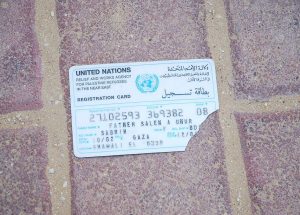
UNRWA registration card recovered during counterterrorism operation in southern Gaza, 26 July 2007, via Wikimedia Commons

In a surprising change of policy, Israeli Prime Minister Netanyahu has called for the dismantling of UNRWA. Such a move could benefit both Israel and the peace process. The new US administration might change its decades-old policy as well.

Last month, Israeli Prime Minister Benjamin Netanyahu stunned many by declaring that the United Nations Relief and Works Agency (UNRWA) should be dismantled.

Speaking at a weekly cabinet meeting, Netanyahu charged that
“in various UNRWA institutions, there is a lot of incitement against Israel, and therefore the existence of UNRWA – and unfortunately its work from time to time – perpetuates the Palestinian refugee problem rather than solves it. … Therefore, the time has come to dismantle UNRWA and merge its components with the United Nations High Commissioner for Refugees [UNHCR].”
This long overdue step was rejected for years by the Israeli establishment. Up to now, Jerusalem has prevented attempts to change UNRWA’s mandate or close it down because it perceived the agency as a stabilizing factor. Israel focused instead on anti-Israeli incitement in UNRWA’s education system and on its collaboration with Hamas. That collaboration implied an international imprimatur on egregious Hamas behavior.

Instead of fighting UNRWA’s very existence, Israel focused on its actions. This time, the prime minister is talking about a bigger shift in policy.

UNRWA’s initial role was to distribute humanitarian assistance to Palestinian Arabs displaced during the 1948 war. However, over the years, instead of being a tool to solve the refugee problem, UNRWA has become a tool for its eternal perpetuation. Without UNRWA, the Palestinian refugees, and certainly their children, grandchildren, and great-grandchildren, would have resettled in their Arab host countries or elsewhere in the world, as many millions of other refugees have done. They would have done so reluctantly, of course, but would have had no other choice, as no organization would have taken care of them for so many years.

Because UNRWA did nothing to reduce the number of Palestinian refugees, their numbers have swollen from 750,000 in 1949 to more than 5 million today. This was a surrender to the Arab wish to perpetuate the problem. From its earliest stages, UNRWA was a politicized agency, more interested in appeasing the Arab world’s wish to destroy Israel than in the humanitarian cause for whose sake it was established.

Without UNRWA, the Arabs could not have come to the negotiations table with international support – as embodied by UNRWA – for their ridiculous demand that 5 million refugees and their descendants be allowed to resettle in Israel, thus subverting its Jewish nature. Without UNRWA, only a small fraction of its “registered refugees” would be considered real refugees in the first place. Many of UNRWA’s refugees should never have been granted that status, and the vast majority of them are descendants who would not be granted automatic refugee status elsewhere in the world. The Arabs would likely have attempted these demands, but would not have had the backing of a special UN agency.

As the years have worn on, UNRWA has maintained a system expressly meant to perpetuate the refugee problem rather than solve it. Unlike the UNHCR, which provides six options for the cessation of the status of refugee, UNRWA offers zero. Whereas the primary concern of UNHCR is to resettle refugees and help them build new lives, UNRWA promotes only one future: repatriation to Israel. That prospect is contrary to worldwide historical practice and anathema to Israel. It is also toxic to both the prospects for a peace agreement and Palestinian national development.

In effect, UNRWA has become a spokesman – and patron – for the call to destroy the Jewish homeland by flooding it with millions of refugees and their descendants. Without UNRWA, it is hard to see how the belligerent Palestinian/Arab call for return could have survived for seven decades. Because Israel is not going to commit national suicide via demographic subversion, this UNRWA-induced intransigence is an assured recipe for the conflict’s prolongation.

Merging UNRWA into UNHCR would mean an immediate drop in the number of Palestinian refugees from more than 5 million today to a few hundred thousand, perhaps even fewer. 

Most of UNRWA’s refugees either never left their country (Mandatory Palestine) or became citizens of another country (Jordan) and would thus simply be omitted from the list. 

Moreover, this merger would mean repatriation is not the sole option for solving the Palestinian refugee problem. Both these outcomes are clearly in the interests of both Israelis and Palestinians.

The Trump administration seems open to fresh ideas. For years, the US – the biggest donor to UNRWA – did not want to deal with the agency because it feared an Arab backlash. This time, it appears Washington and the Sunni world have enough in common – from fighting Iran to signing major arm deals – that Washington should not fear making major changes to UNRWA, or even abolishing it altogether. A push from Jerusalem may well wield results this time around.

Thursday, July 13, 2017

Winds of war in the Persian Gulf?

From BESA Center Perspectives Paper No. 527, July 13, 2017, by Dr. Edy Cohen:

The winds of war blowing between Saudi Arabia and Qatar, as well as Iranian subversion, are destabilizing the Persian Gulf principalities. 

To make matters worse, the economic situation, which has worsened in recent years because of ill-advised decisions, is stoking fears of popular uprisings and widespread disturbances ... in which some of the Gulf monarchies might fall. 

The main winner would be Tehran, for which the current crisis, along with the boycott imposed on Qatar, has opened a path to a takeover of Bahrain – and Iran has already, in effect, taken over Baghdad, Damascus, Beirut, and Sana’a.   

The Saudi economy has seen an unprecedented deterioration in recent years. The continued decline of oil prices in world markets, the massive assistance to Egypt since the July 2013 takeover by Abdel Fattah Sisi, the cost of funding the coalition fighting the Houthis and their Iranian patrons in Yemen, and of course the considerable aid extended to the Syrian rebels have wreaked havoc on Riyadh’s public treasury and the ruling monarchy’s personal wealth.

As a result, Riyadh has had to slash 900 riyals (about $300) from military and civil servant salaries as part of a major cutback in the public sector, including the abolition of salary increments and bonuses. Recently, the authorities have also had to hike taxes on cigarettes and energy drinks to the tune of 100% of the cost of the product, after having imposed new taxes in June. One sign of the crisis reflecting its severity is a new toll that will go into effect in April 2018 on roads in the Riyadh area and on crossings into neighboring Arab states.

Aside from affecting its own residents, Saudi Arabia’s economic situation also stands to affect other Gulf countries and particularly Bahrain, which is suffering its own deep crisis as Tehran arms and funds Shiite organizations aimed at destabilizing it.

The Iranians have been exploiting Riyadh’s and Bahrain’s difficulties to the hilt. Not long ago, the Saudis thwarted an attack near the holy sites of Mecca. The Iranian subversion could escalate to the point of seeking to destabilize the kingdom (as it is doing in Bahrain) by activating armed militias within its territory.

Shiite Iran is also helping Qatar, which, according to the (Saudi) plan, should by now have been begging for the lifting of the boycott. Tehran is thereby driving a wedge between the Arab Gulf principalities and bolstering its own status as the region’s hegemonic power. It has been sending Qatar tons of food and raw materials daily by sea, and these goods have flooded the emirate’s markets and shopping centers.

There is, however, no free lunch. Tehran is now regarded as having rescued Qatar, and the principality will have to reward it for this. Iranian aid has already weakened the Sunni political-military coalition that was supposed to contend with Tehran’s expansionary ambitions. For example, Qatar has pulled out of the anti-Houthi coalition in Yemen.

The state of affairs in the Persian Gulf is extremely delicate. The fall of one principality would probably lead to the fall of others. The Gulf is undergoing one of the most difficult economic crises in its history, one that could destabilize some of the monarchies. Angry demonstrations and riots against rising prices, new taxes, and mounting unemployment, similar to those that occurred in Tunisia, Egypt, Libya, Yemen, and Syria in 2010 and 2011 – the ultimate nightmare of any Arab leader – are entirely plausible.

Moreover, the Qatar crisis is not over. The principality has strongly rebuffed the twelve Saudi conditions for lifting the blockade and normalizing relations with the foursome (Saudi Arabia, Egypt, the United Arab Emirates, and Bahrain). Those conditions include downgrading Qatar’s diplomatic ties with Tehran; ensuring that forces of the Iranian Revolutionary Guard Corps leave the emirate; shutting Turkish military bases in Qatar; severing Doha’s ties with the Muslim Brotherhood, Hezbollah, al-Qaeda, and ISIS while ceasing to fund them; handing over terrorists residing in Qatar to the foursome; closing the Al Jazeera network; and paying compensation.

The failure of the attempt to isolate Qatar and subjugate it to the foursome’s demands has stirred fears of a Saudi military intervention there. Iran, however, has scored many points with the Arabs thanks to its support for the emirate. This is part of a long-term strategic game in which Iran first seeks to win Arab states’ sympathy and then arms and activates subversive groups in the Gulf.

Tehran is striving to curtail American and Saudi influence in the Gulf, take over the Islamic world in general, and seize the Gulf’s natural resources and holy places via its erstwhile proxies, the Yemeni Houthis positioned along the Saudi border.

If Tehran’s plan succeeds, the Persian Gulf will be effectively divided between it and Russia, a highly undesirable development for Israel. The Gulf crisis is wholly unrelated to Israel, but Jerusalem must closely monitor what is happening there.

The current situation is ostensibly good for the US ...exporting weapons and military equipment, as President Trump promised he would do during his Riyadh visit. Yet instead of seeking profits, however substantial, Washington would be better off working to enhance stability in the region...

Wednesday, July 12, 2017

Israel won. Now live with it.

From Melanie Phillips, 10 July 2017:

The Middle East Forum held a meeting in Jerusalem last night to discuss Daniel Pipes’s “Victory Caucus“ ...He urges that the conflict should be reframed as a war which Israel has won and the Arabs have lost rather than a never-ending impasse with demands upon Israel for negotiations, peace processes and compromises...

This is a very much-needed initiative. There is an urgent need to recalibrate the whole issue ... for the benefit of the Palestinians ...for the west and also for Israel.

We have to ask ourselves, surely, why do the Palestinians think the war is still on. Well, I think there are a number of reasons for that. One reason is that, unfortunately, if you are a religious Muslim you believe that any land conquered by Islam is then consecrated to Islam and nobody else can ever have sovereignty over it. So from that point of view there can be no victory over that kind of fanatical religious mindset.

But the main reason why the Palestinians think the war is still on is because they are encouraged to think that by the west. By Britain, by Europe and also by Israel’s great ally and friend, America.

The Palestinian story has been accepted by the west to the extent that the west believes there is a Palestinian people which has a historic, national and legitimate claim to the land. There never was a Palestinian people, there is not, and it does not now have any legitimate claim to the land.

Even if it did have a claim to the land it would be forfeit because of nearly a century of exterminatory aggression. In every other conflict in the world, that sort of exterminatory aggression means that the aggressors are treated as pariahs. Uniquely in this conflict the aggressors have been treated over the best part of a century – because of their aggression – as statesmen-in-waiting.

It’s not rocket science. If you treat aggressors as statesmen-in-waiting, you do not get peace and harmony. You get more aggression.

Now why has the west rewarded aggression in this way – uniquely – in this region? Many reasons. One is ignorance. One is malice. One is realpolitik – the desire to appease the Arabs over the oil weapon. Another is simply that people in the west believe – and I’ve heard this so many times – that there is no alternative.

But I would suggest there’s a deeper problem here. The prevalent view in the west is that it no longer does war and victory. This is seen as uncivilised. War is seen as brutal, uncivilised and must never be undertaken. If the Palestinians or the Arabs or the developing world are waging war, well we “expect that of them”, don’t we, because they are basically “uncivilised” people. We in the west do not apparently expect them to accord with our own values of respect for human life, democracy and all the rest of it. In other words, the west has a deeply racist attitude towards the developing world.

And it believes in itself that it doesn’t do war any more because war is uncivilised. Instead of war it does conflict resolution; it does law, not war.

And so as a result the war that’s been taking place in this region by the Arabs against the Jewish homeland means that the west thinks that a compromise is essential. You have a war of extermination? Put the two sides in the same room, bang their heads together until they reach a compromise. Because both sides, according to this view, have a legitimate claim to the same piece of land.

In other words the west has, for nearly a century, mistaken this whole conflict as a fight over land boundaries whereas in fact it is a war of extermination. And where the west wants to press Israel to make compromise, every compromise Israel has ever made is seen by the Arabs as a sign of weakness and an incentive to further aggression.

In conclusion, I would say that the west’s mistake – its conceptual, its fundamental mistake – perpetuates this conflict; indeed it is a signal reason, possibly the main reason, why this conflict got under way in the first place.

In the 1930s, Britain responded to the pogroms being committed by the Arabs of this land against the returning Jews – and responded to the Arabs’ violence against the then-ruling British under the Palestine Mandate – Britain responded to this aggression by saying to the Arabs: “Have part of the land which we have undertaken by solemn agreement under international treaty obligation to give to the Jews”.

In other words, the original “two-state solution” was proposed in 1936 as a reward for exterminatory aggression and terror; and that continues to be the case today.

My final point is that the west needs to understand this – but, my goodness, Israel needs to understand that this narrative has to change. Israel is most reluctant to say to the free world, to the west, what it should be saying: 
“Are you crazy? Why do you treat this conflict differently from all other conflicts?” 
And until the west and until Israel actually understand that this conflict has to be reframed as one of war and victory, we’re not going to get anywhere

Saturday, July 08, 2017

Carr push a worry

From The Australian, 8 July 2017, by Peter Baldwin:


Federal Labor frontbenchers Anthony Albanese and Tony Burke. 
Picture: Justin Brierty

Bob Carr is at it again, working hard to shift the ALP away from its (and his) previous position of strong support for Israel to one of seriously unbalanced support for Palestinian demands.

Talk about strange bedfellows. Carr has congratulated Greens senator Lee Rhiannon, a person he strongly criticised in the past, for her “very strong and very brave” efforts on this issue. High praise for someone who consistently reduces the Israel-Palestine issue to wooden Marxist cliches about “oppressor and oppressed”.

Later this month, the NSW Labor Party conference will debate a motion, strongly backed by Carr, calling on a future ALP government to “recognise Palestine”. The proposition will then go to the ALP national conference next year, at which it is expected to pass with the support of the national left and the NSW right.

This would represent a significant hardening of the position adopted at the 2015 national conference that called on a Labor government to “discuss” Palestinian recognition with other nations if the peace process stalled and Israeli settlement building continued. The 2015 resolution was itself a major change from the party’s earlier stance, which recognised that a Palestinian state could emerge only from a comprehensive negotiated settlement with Israel.

So, assuming this goes as expected, a Labor federal government would be formally bound to grant immediate and uncondi­tional recognition to a Palestinian state.

But before turning to the merits of this proposition it is worth digressing to reflect on the political dynamics at work here that are symptomatic of some local and global trends that should worry not just Israel’s supporters but anyone concerned with the integrity of policymaking processes in our main political parties.

Last week Carr gave a talk on Palestine to a gathering of ALP members organised by the party organisations in the Watson and Grayndler federal electorates. The MPs for these seats Tony Burke and Anthony Albanese, frontbenchers affiliated with the right and left factions respectively, were present.

Carr’s talk consisted of an unbroken recitation of alleged Israeli villainy, devoid of even the slightest suggestion of fault on the Palestinian side. There was no reference to the repeated two-state offers by Israel and no acknowledgment of the genocidally hostile “negotiating partners” that Israel has had to deal with.

The whole tenor of the speech was grotesquely unbalanced, as must have been obvious to Carr and the senior MPs present. Yet there was not the slightest dissent from anyone at the meeting. Labor members of left and right now are starting to sound like Rhiannon.

So what is going on here? The obvious explanation is to point to electoral demographics, the string of western Sydney electorates with large Arab and Muslim populations, Blaxland topping the list with Muslims comprising about 25 per cent of the electorate.

But more significant than straight electoral demographics, I suspect, is the changing composition of party branches, some of which are drawn overwhelmingly from these communities, so that MPs may have more reason to fear loss of party preselection than defeat in the general election.

I can speak on this as someone who was closely involved in the “branch stacking” wars in the 1970s and 80s that for a time convulsed Labor branches in inner Sydney.

When it comes to branch stacking, there is nothing to match an industrial scale “ethnic stack” in which “community leaders” deliver the votes en masse. Local members are rightly terrified of this phenomenon, and typically fall over themselves trying to appease whichever group, or individual, is responsible.

The risk is that the Labor Party — and not just the Labor Party — becomes a vehicle for sectional interests. For a warning of where this can lead consider Britain, where extremism and anti-Semitism have become rife within the Labour Party, leading to two official inquiries and where party gatherings are starting to be segregated by gender in some areas.

Even the Oxford University Labour Club has been rent by disturbing allegations of anti-Semitism.

I don’t think it is possible to overstate the importance of this sinister development.

But returning to the Palestinian recognition issue, we need to ask what kind of Palestinian state would be being recognised?

Under customary international law, a proper state must meet certain criteria set out in the Montevideo Convention on the Rights and Duties of States (1933).

As well as having a permanent population and a defined territory, it must also have a single centralised administration that can assert its authority over and maintain order among the people in its territory without the assistance of another state.

Furthermore, it must be able to enter into relations with other states and be able to deliver on any international agreements it makes.

To suggest that a Palestinian state based on the West Bank and Gaza Strip could, under anything like present circumstances, go anywhere near meeting these requirements is patently ludicrous. Since the Israeli withdrawal from Gaza in 2005 the territory has been controlled by the terrorist group Hamas, which seized control in an armed coup in 2007 that culminated with Palestinian Authority officials being hurled to their death off tall buildings.

The two factions remain bitterly divided to this day, with the Palestinian Authority controlled by Fatah recently cutting off electricity to Gaza.

Hamas has used its control of Gaza to mount repeated attacks on Israel, most recently in 2014, with appalling consequences for Israel but most especially for the people of Gaza.

The position of Fatah in the West Bank is tenuous, and increasingly devoid of any shred of democratic legitimacy. It is loathed for its corrupt and incompetent administration. The last legislative elections were held 11 years ago and were won decisively by Hamas.

In 2014 the Fatah administration was saved from being overthrown by a Hamas coup only by the intervention of the Israeli domestic security agency, Shin Bet, Israel reasonably taking the view that Fatah was the lesser evil compared to Hamas with its explicitly genocidal ideology.

A lesser evil, perhaps, but Fatah is still pretty bad. Back in 2015 the “moderate” chairman of the Palestinian Authority, Mahmoud Abbas, praised those who participated in a “stab a Jew” campaign that arose from a blatantly confected campaign suggesting the Israelis were about to change the status of the Temple Mount/al-Aqsa Mosque holy sites to allow Jews as well as Muslims to pray there. This was what Abbas posted on his personal website: “Al-Aqsa Mosque is ours … and they have no right to defile it with their filthy feet. We will not allow them to, and we will do everything in our power to protect Jerusalem … We bless every drop of blood that has been spilled for Jerusalem, which is clean and pure blood.”

But back to Hamas.

Just a month ago Hamas leaders emphatically rejected the right of Fatah figures such as Abbas to negotiate on their behalf after the latter gave certain commitments when meeting US President Donald Trump: “No one has authorised Mahmoud Abbas to represent the Palestinian people and no one is obligated to any position he’s issued.” So much for the requirement that a legitimate state be able to enter into and adhere to international agreements.

Just recently Hamas released a new policy statement that some in the West hailed as replacing its genocidal charter that (in article 7) looks forward to the day when the last Jew can be exterminated. This is delusional: Hamas has made clear that the new document does not supersede the charter or alter it in any way.

Importantly, the new document that Hamas’s apologists in the West hail for its “moderation” makes clear that a state based on the West Bank and Gaza would be no more than a transitional step to the ultimate goal of Israel’s complete destruction. As the document spells out: “Hamas rejects any alternative to the full and complete liberation of Palestine, from the river to the sea.”

This chimes with numerous statements by senior Hamas officials through the years, such as this one from Mahmoud al-Zahar, who has served as foreign minister in Hamas’s Gaza regime: “We don’t want to establish an Islamic emirate in Gaza; we want an Islamic state in all Palestine.”

Zahar went on to say that if Hamas could move part of its assets to the West Bank, “we will be able to go for a successful battle that we will win it at the end.”

What does he envisage happening “at the end”? In 2010 he boasted about the anticipated annihilation of the Jewish people in these terms: “We extended our hands to feed these hungry dogs and wild beasts, and they devoured our fingers. We have learned the lesson — there is no place for you among us, and you have no future among the nations of the world. You are headed to annihilation.”

Let us suppose hypothetically that the international efforts to secure a Palestinian state under present circumstances were successful and that Israel was forced to concede a state based on the West Bank, the Gaza Strip and East Jerusalem and withdraw all of its security forces. What might eventuate?

I think we can confidently predict that the results will not be pretty.

Consider the Gaza precedent. In 2005 the government of Ariel Sharon carried out a complete withdrawal of the Israeli civil and military presence in Gaza. The 9000 Jewish settlers were forced to leave, in some cases having to be dragged out.

There was a great deal of optimism at the time, the decision receiving high praise interna­tion­ally. There was even talk of Gaza becoming a “Singapore on the Mediterranean”. A Jewish businessman financed the purchase of a complex of high-technology greenhouses that supported a thriving horticultural industry and donated it to the Palestinians.

We all know what happened. There was a vicious power struggle in which Hamas emerged triumphant over the Palestinian Authority and began the militarisation of the strip, building a huge subterranean infrastructure of tunnels, command posts, weapons and storage dumps below the densely populated areas of the strip.

Key military assets were deliberately placed near hospitals, schools and mosques to maximise the adverse publicity for Israel when the inevitable battles began. Since then, there have been repeated rounds of vicious conflict. Israel has been terrorised with rocket attacks and Gaza civilians suffered even worse as Israel retaliated. Parts of Gaza where the military assets were placed have been repeatedly reduced to smoking ruins, the economy crippled, the civilian population immiserated.

Now consider: who is likely to prevail in a fight for control of a Palestinian state based on the West Bank as well as Gaza between the rancid, corrupt and unpopular Fatah and the jihadist fanatics of Hamas? All recent precedent suggests the latter will be the “strong horse”.

Having thus secured control, Hamas would be in an incomparably stronger position to pursue its ultimate goal of completely destroying Israel.

It would have far more territory, much greater proximity to the main Israeli population centres, and much longer borders that would be impossible to secure to prevent infiltration of arms.

The result would be “Gaza writ large”, an unimaginable catastrophe for both Israelis and Palestinians.

Israel-USA relations: a whole new ballgame

From Israel Hayom, 7 July 2017, by Ruthie Blum:


U.S. Ambassador to Israel, David Friedman ...this week... At the annual Fourth of July ‎celebration... stressed America's ‎‎"unbreakable bond" with the Jewish state.‎

The bond Friedman was referring to had become so fragile during former U.S. President Barack ‎Obama's two terms in office that it became the punchline of a joke ...by comedian ‎Jay Leno. Obama, Leno quipped, knows just how unbreakable the U.S.-Israel bond is, "since ‎he's been trying to break it for years."‎

...And then [Friedman] quoted, in Hebrew, a line from Psalm 118 -- "This is a day that the Lord has made; ‎let us [be glad and] rejoice in it" -- to make a point about Israel's being "the source of many of the ‎Judeo-Christian values that spawned the American enterprise." He invoked the famous Puritan Pilgrim John Winthrop, who in 1630 "implored his followers to be faithful to the teachings of ‎the Jewish prophet, Micah, to 'do justice, love mercy and walk humbly with thy God,'" [This line happens to be the last line of this week's Haphtorah: Balak - SL] and told ‎new immigrants to America that if they did so, they would "find that the God of Israel is among ‎us." ‎

He said that when Winthrop "referred to New England as a 'city upon a hill with the eyes of all ‎people upon us," he was also referring to Jerusalem. Indeed, Friedman added,
"So much of who ‎we are derives from the teachings of ancient Israel. And, perhaps for that reason, it is no surprise ‎that the United States and Israel have the most special of special relationships."‎
Here, again, Friedman purposely spoke of Jerusalem, emphasizing that the success and mutual ‎admiration that America and the Jewish state enjoy emanate from "ancient Israel."‎

‎"We have, of course, common enemies that unite us," he said -- as well as military, trade, culture ‎and cybersecurity cooperation. "But our collective core, what fundamentally unites us, is that we ‎are the two shining cities on a hill, drawn together by a shared history, shared values and ... a ‎shared destiny of continued greatness."‎

This declaration was nothing short of momentous, particularly as it came on the heels of senior ‎Trump adviser and son-in-law Jared Kushner's June 21 meeting in Ramallah with PA President ‎Mahmoud Abbas, whose henchmen described the encounter as "tense." Apparently, being told ‎by a prominent member of the White House staff that the paying of terrorists' salaries has got to ‎stop is not what Abbas had expected to hear -- despite being yelled at by Trump himself in May ‎for having lied about the rampant incitement in the PA against Jews and Israelis.‎

Friedman's next allusion to Jerusalem involved noting that he is the "first [U.S.] ambassador to ‎accompany [Trump] in visiting the kotel hamaaravi, the Western Wall." From here, he segued ‎into his conclusion by talking about how, earlier in the day, he and Israeli Prime Minister ‎Benjamin Netanyahu had toured the aircraft carrier the USS George H.W. Bush off the coast of ‎Haifa. ‎

Peace through strength, he announced (quoting King David's words in Psalm 29, which he said ‎his father used to recite every Shabbat morning) is "a foundational cornerstone of the Trump ‎administration" and a "guiding principle of the State of Israel." ‎

Finally, Friedman said that American men and women in uniform, like their Israeli counterparts ‎in the IDF, "hope never to fire a shot," preferring to keep the world safe through a demonstration ‎of strength and courage. However -- he implied -- they willingly sacrifice their lives in this ‎mission if left no other choice.‎

While the new U.S. ambassador to Israel wound down his remarks by wishing the United State a ‎happy 241st birthday, the audience revved up its cheering for the start of what Americans call "a ‎whole new ballgame."